The average candidate submits 15 applications per open job, and 41% of employers receive more than 100 applications for each entry-level posting (Zipdo recruiting statistics). That isn't a filing problem. It's a volume problem, and it's why job application management has to work like a real system instead of a memory test.
A job search often starts with a spreadsheet, then gets buried in browser tabs, email labels, and half-updated notes. That works until the first recruiter reply lands late, a follow-up date passes unnoticed, or two versions of the same resume get mixed together. Once the search becomes a funnel, not a to-do list, the right move is obvious, track every submission, every contact, and every outcome in one private record.
Table of Contents
- Why Modern Application Volumes Break Memory-Based Tracking
- Building a Stage-Based Private Tracking Board
- Automating Your Job Search Inbox
- Defining and Measuring Employer Ghosting
- Evaluating Companies Before You Apply
- Running a Weekly Funnel Review
Why Modern Application Volumes Break Memory-Based Tracking
The modern search creates more records than most job seekers expect to manage cleanly. When you are sending out dozens of applications and employers are sorting through 100-plus applications for a single entry-level opening, effort is usually not the problem. The missing structure is (Zipdo recruiting statistics).
Why memory fails fast
A basic notes app cannot tell you which role you applied to last Tuesday, which company already sent an automated acknowledgment, or which job still needs a follow-up. It also cannot separate a referral, a company career site submission, and a job board application, so everything gets flattened into one vague pile. The search can feel active while the bottlenecks stay hidden.
Practical rule: if you cannot answer “what happened last?” in five seconds, your tracker is already too loose.
Employer response is part of the same volume problem. Recruiters are handling heavy inbound demand, and the result is delayed replies, partial updates, and silent rejection. One missed date can mean missing the only useful window for a follow-up.
What a private system solves
A private application board keeps the search organized without turning your entire career history into a public document. It gives you one place to store the role, company, source, stage, and next action date, so the search becomes searchable instead of anecdotal. That is the difference between guessing what happened and knowing where each application stands.
Job application management stops being clerical and starts becoming tactical here. You are preserving timing, context, and the thread of each conversation so you can act on it properly.
Building a Stage-Based Private Tracking Board
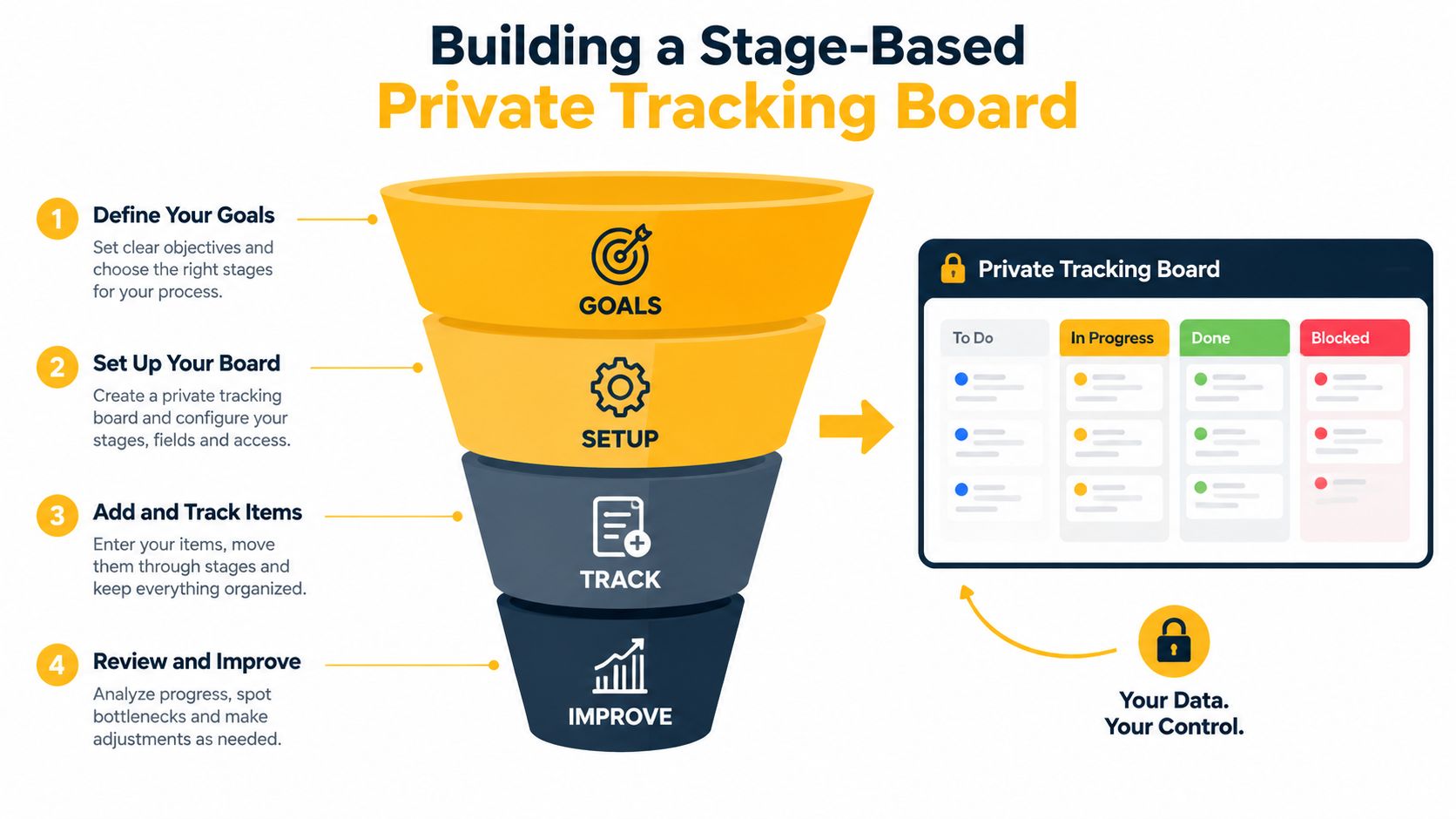
A good tracker models the search as a funnel, not a list. The useful fields are straightforward, company, role, application date, source, current stage, next action date, and, when you have it, resume version or ATS used. If the board doesn't let you sort by stage, it's probably too shallow to support real decisions.
The stages that actually matter
Start with submission, then move through screening, phone interview, full interview, final stage, offer, acceptance, withdrawal, rejection, and no response. That stage detail matters because silence after an application is not the same as silence after a final interview. Different stages carry different timelines, different expectations, and different emotional weight.
The evidence for stage tracking is strong on the candidate side too. A 2025 iHire study summarized by Pin reported that 28% of candidates stopped responding immediately after submitting an application, 16% disappeared after the phone screen, and 20% stopped responding after one full interview (Pin candidate ghosting). Those drop-offs prove that if you collapse everything into one “inactive” label, you lose the point where communication broke down.
Keep acknowledgments separate from real responses
One of the most common tracking mistakes is treating an automated receipt as a genuine recruiter response. Don't do that. An acknowledgment confirms delivery, but it doesn't tell you whether a human has reviewed the file, moved you forward, or closed the loop.
Use aging rules too. If a role passes your expected window without any update, flag it, document one follow-up, then close it as rejected, withdrawn, or unresolved. Leaving records forever in “applied” makes the board look active while hiding dead ends. I've found that the moment a tracker starts mixing stages, receipts, and outcomes, follow-up discipline falls apart.
For a practical template, use a private board like the one described in this application tracker guide. It's easier to keep one clean record than to reconstruct one from email later.
Automating Your Job Search Inbox
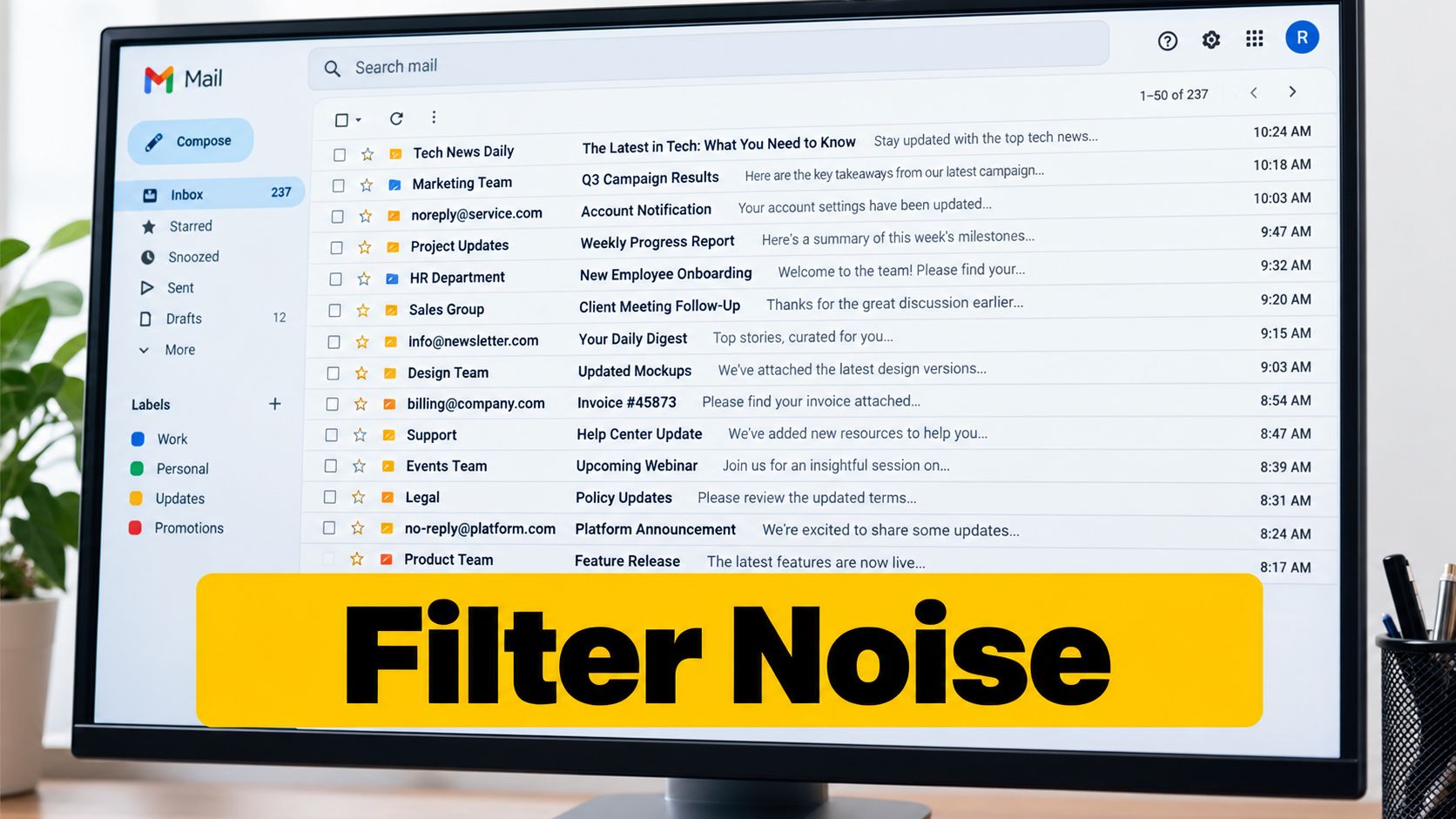
Recruiter messages rarely arrive alone. They get buried under job alerts, marketing mail, password resets, and the noise that comes with applying across multiple platforms. The result is simple, important replies get lost in the same inbox as everything else.
Why manual inbox sorting breaks down
Manual filtering works until the search accelerates. Then you're trying to remember which recruiter contacted which role, which message belongs to which employer, and whether the last thread was a substantive update or just a canned receipt. That's a lot to ask of a crowded inbox.
The better approach is to connect job-related email threads directly to the matching application record. When that happens, the inbox stops being a separate system and becomes part of the board. The context stays attached, and you don't have to copy timestamps into multiple places or rebuild the history from scratch.
What automation should do, and what it shouldn't
Automation should route conversations to the correct role, preserve the thread, and keep job-search messages out of the main inbox flow. It should not overwrite judgment, because a recruiter's silence still needs to be interpreted against the stage you're in. The tool is there to reduce friction, not to make decisions for you.
A practical setup also helps if you're applying from more than one channel. A recruiter reply, a career site confirmation, and a scheduling note should all land in the same record so you can see the chain of events. That reduces duplicate follow-ups and prevents the common mistake of treating each message as if it came from a separate application.
GhostedBy is one option that combines a private board with an optional dedicated inbox and automatic application tracking, so the conversation stays tied to the right role. The value isn't hype, it's fewer lost threads and less manual cleanup.
Defining and Measuring Employer Ghosting
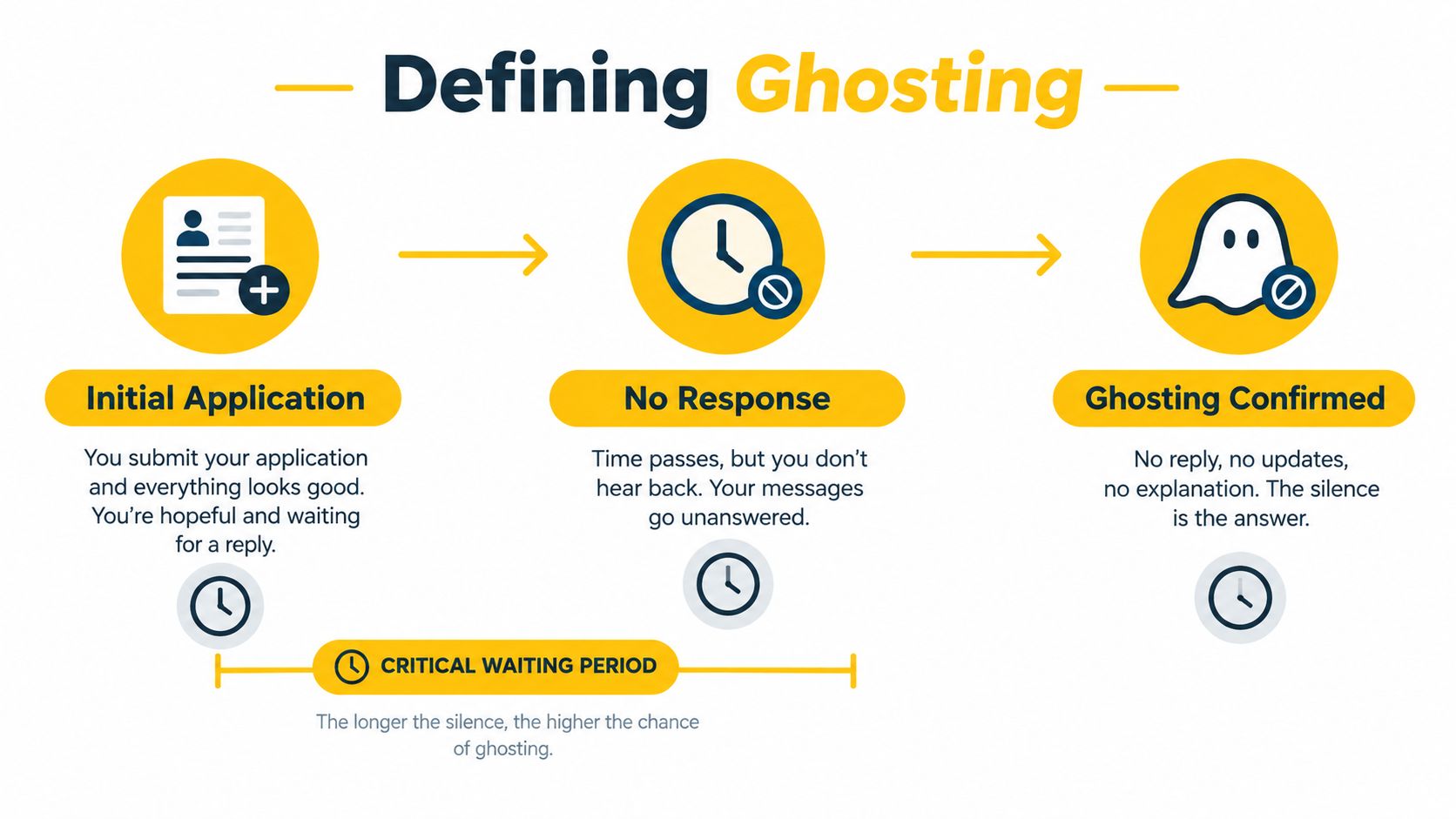
A hiring process that leaves candidates waiting without a clear endpoint is measurable, and the measure has to start with silence. A strict 21-day window gives the search a usable standard, because response delays usually vary by stage, not just by tone.
Define silence by stage, not by instinct
The key question is what the silence followed. An application acknowledgment, a scheduling delay, a status update, and a final rejection all carry different meanings. Silence after a screen is not the same as silence after a final interview.
HR Dive reported that 57.5% of applicants identified applying for a position and never hearing back as one of their biggest frustrations (HR Dive on hiring trust gaps). That frustration is easy to understand. The useful response is operational: track the last relevant contact, set the waiting period, and label the outcome once the window expires.
Silence after submission is a data point. Silence after an interview is a different data point. Treating them the same hides where communication actually broke down.
Record outcomes without exposing identities
Candidates can record outcomes in a way that protects personal details while still building a company-level record. That record should show whether the employer responded, closed the process, or went silent after the last relevant contact. It should not depend on anonymous anecdotes, because anecdotes are hard to compare and easy to distort.
The aim is a usable definition, so the candidate can decide whether to re-engage, withdraw, or stop investing time. That decision gets easier when the date, stage, and outcome are already documented in the board. For a more candidate-facing breakdown of this problem, candidate experience data is worth reviewing.
Evaluating Companies Before You Apply
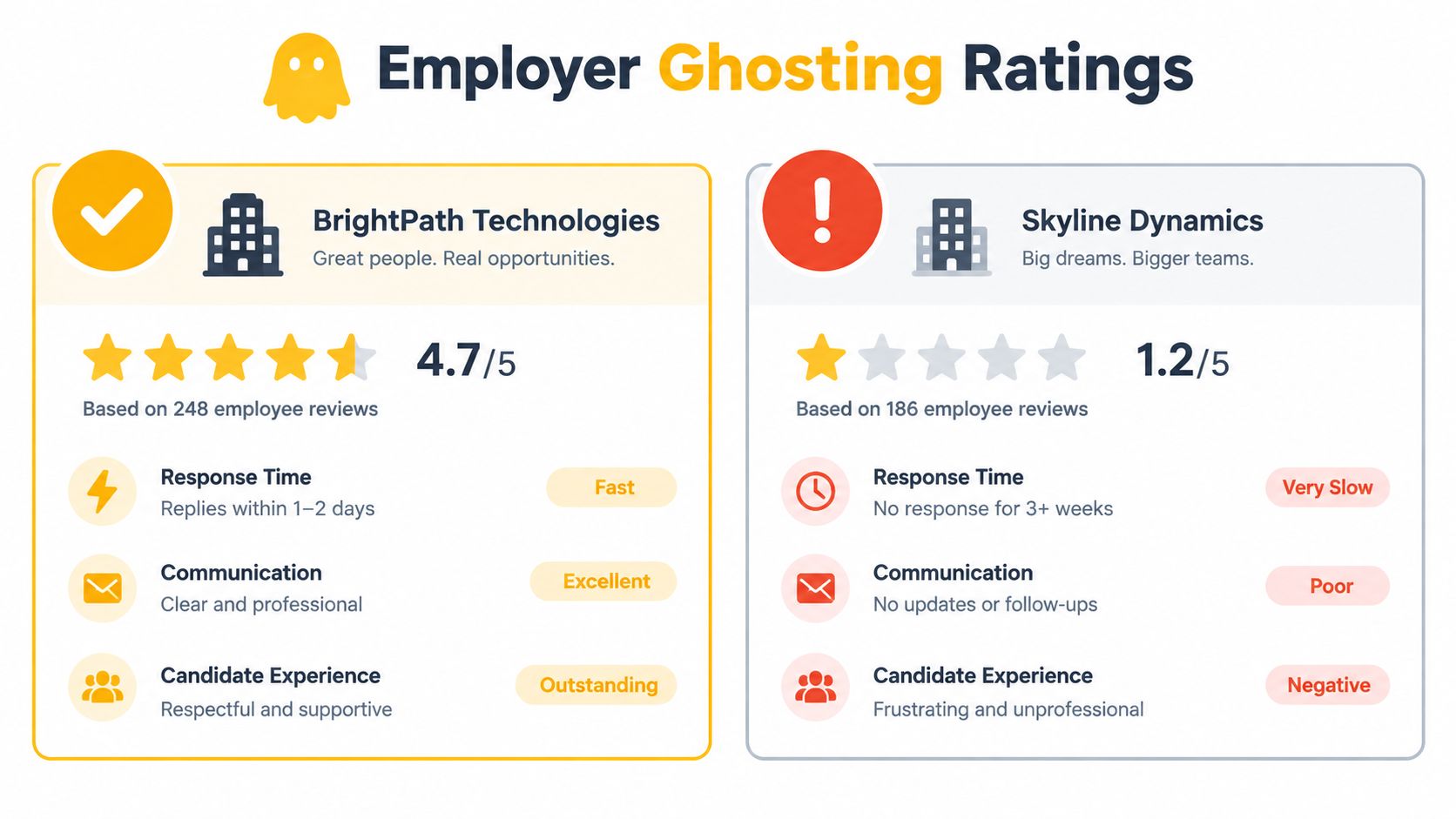
The most expensive mistake in a job search is spending your best effort on companies that rarely communicate. Before tailoring a cover letter or prepping for interviews, check whether a company has a track record of responding at all. That's a better use of time than assuming every posting deserves the same energy.
Response behavior tells you more than branding
A polished careers page says very little about how a hiring team behaves in practice. What matters is whether recruiters communicate clearly and whether timelines are transparent, because those are the traits candidates consistently value. A 2025 Job Seeker Nation report found that strong recruiter communication and transparent timelines were selected by 51% of respondents as major contributors to a positive candidate experience (Employ Job Seeker Nation Report).
That's why structured response data is more useful than subjective reviews alone. If a company routinely leaves applicants in the dark, that pattern should affect where you invest your time. A job board post is not a commitment to communicate.
Use company-level outcomes before you hit submit
The right question is simple, how often do candidates hear back, and how long does it take? A company with a clear response pattern is easier to plan around than one with a silence pattern. That matters even more when you're deciding where to send a custom application versus a quick application.
Traditional review sites often blur together culture, pay, management style, and interview experience. A response-based record is narrower and more actionable because it focuses on one thing candidates can plan around: communication. For deeper employer research, company culture research is the more relevant entry point than a generic review binge.
If a company shows repeated silence, skip the long prep unless the role is worth it. Time is finite, and job application management should protect it.
Running a Weekly Funnel Review
Logging applications is only the first half of the job. The advantage comes from reviewing the funnel on a weekly cadence, because a static tracker still leaves you guessing. A practical system should calculate response rates weekly, compare conversion rates by source, and use medians for response time so late replies don't distort the picture (Scale.jobs funnel tracking guide).
What to review every week
Start with the basic funnel, applications submitted, employer responses, interviews, offers, acceptances. Then break the data down by source so referrals, company career sites, recruiter outreach, and job boards don't get pooled into one meaningless average. Pooled data hides patterns, and hidden patterns lead to bad tactics.
Look at response latency too, not just success rate. If one channel produces faster replies but fewer interviews, and another produces fewer replies but better conversion, that's useful information. The board should show both so you can decide where to spend your time next week.
The record is most useful when it tells you what to stop doing.
Make every review produce one decision
Each weekly review should end with a change. That might mean tightening follow-up timing, cutting a weak source, or giving more energy to referrals. If the review doesn't change behavior, it's just bookkeeping.
It also helps to close stalled records instead of leaving them open forever. A process that has gone silent past your 21-day standard should be labeled and moved out of the active queue. That creates a cleaner view of what is in motion and prevents your search from becoming cluttered with dead applications.
A solid review rhythm doesn't need complexity, just consistency. You track submissions the day they happen, capture every meaningful contact, then review the funnel once a week with enough discipline to tell the truth about what's working. That's how a search becomes manageable instead of emotional noise.
If you want a cleaner way to track roles, responses, and ghosting without living in spreadsheets, visit GhostedBy. It gives you a private way to manage applications, attach conversations to the right role, and see how companies behave before you invest more time.