The most popular advice after a final interview is also the least useful: send a polite follow-up, wait patiently, and assume the company is busy. That approach treats silence as an etiquette problem. It's usually a pipeline problem.
When you're ghosted after a final round interview, your task isn't to decode every delay or keep refreshing your inbox. Your task is to establish a deadline, test whether the process is still alive, record the outcome, and move your search forward. Hiring teams can lose budget, change headcount plans, choose an internal candidate, or leave a decision stuck between competing stakeholders. None of those events should freeze your career.
Table of Contents
- Why Final Round Silence Is Rarely About You
- Data-Backed Timelines for Post-Interview Silence
- The Follow-Up and Escalation Sequence
- Documenting Outcomes to Build Market Transparency
- Auditing Your Funnel and Rebuilding Momentum
- Turning Candidate Frustration into Leverage
Why Final Round Silence Is Rarely About You
Reaching a final interview means the company considered you a serious candidate. It doesn't guarantee an offer, but it does tell you that your application survived the employer's major filters. If the company then disappears, the silence may reflect an internal breakdown rather than a clean judgment about your performance.
A role can change after interviews begin. Finance may pause the requisition. Leadership may question the headcount. A team may discover that its priorities have shifted and rewrite the responsibilities. An internal employee may become available, or another finalist may receive an offer while the employer keeps alternatives open.
Those decisions happen inside the company, often away from the candidate. You experience an empty inbox, while the hiring manager and recruiter may be waiting for an approval, negotiating internally, or avoiding an uncomfortable update. That's why final-round silence should be diagnosed as a pipeline-shutdown signal, not immediately interpreted as proof that you failed.
Practical rule: Treat silence as information about the employer's process before treating it as information about your ability.
The data supports that distinction. Greenhouse's 2024 State of Job Hunting report found that 61% of job seekers had been ghosted after a job interview. The rate was 66% among historically underrepresented candidates, compared with 59% among white candidates. Ghosting also appeared throughout the funnel, affecting 24% after an initial recruiter conversation, 23% after a hiring-manager interview, and 12% after a final interview among ghosted candidates.
That pattern matters. Final-round silence is a smaller part of the overall problem than early-stage non-response, but it remains a measurable failure at the point where candidates have invested the most time. Indeed's 2023 Ghosting in Hiring report found that 40% of respondents had been ghosted after a second- or third-round interview, up from 30% in 2022.
Separate rejection from operational failure
A rejection is a decision communicated to you. Ghosting is an absence of closure. Those outcomes can produce the same practical result, but they require different interpretations.
If the employer says it selected another candidate, you can ask for feedback, update your records, and redirect your energy. If the employer says nothing, you don't know whether the requisition closed, the offer is pending, or the team abandoned its communication obligation. Your first priority is to create clarity without allowing uncertainty to consume your search.
Don't use the company's silence as a verdict on your intelligence, preparation, or market value. Use it as a data point about how that employer manages candidates when the process becomes inconvenient.
Data-Backed Timelines for Post-Interview Silence
Candidates often expect a final interview to produce a quick answer. Employers frequently operate on a slower and less disciplined schedule. The gap between those expectations creates unnecessary anxiety, especially when an interviewer gave you a specific date and then missed it.
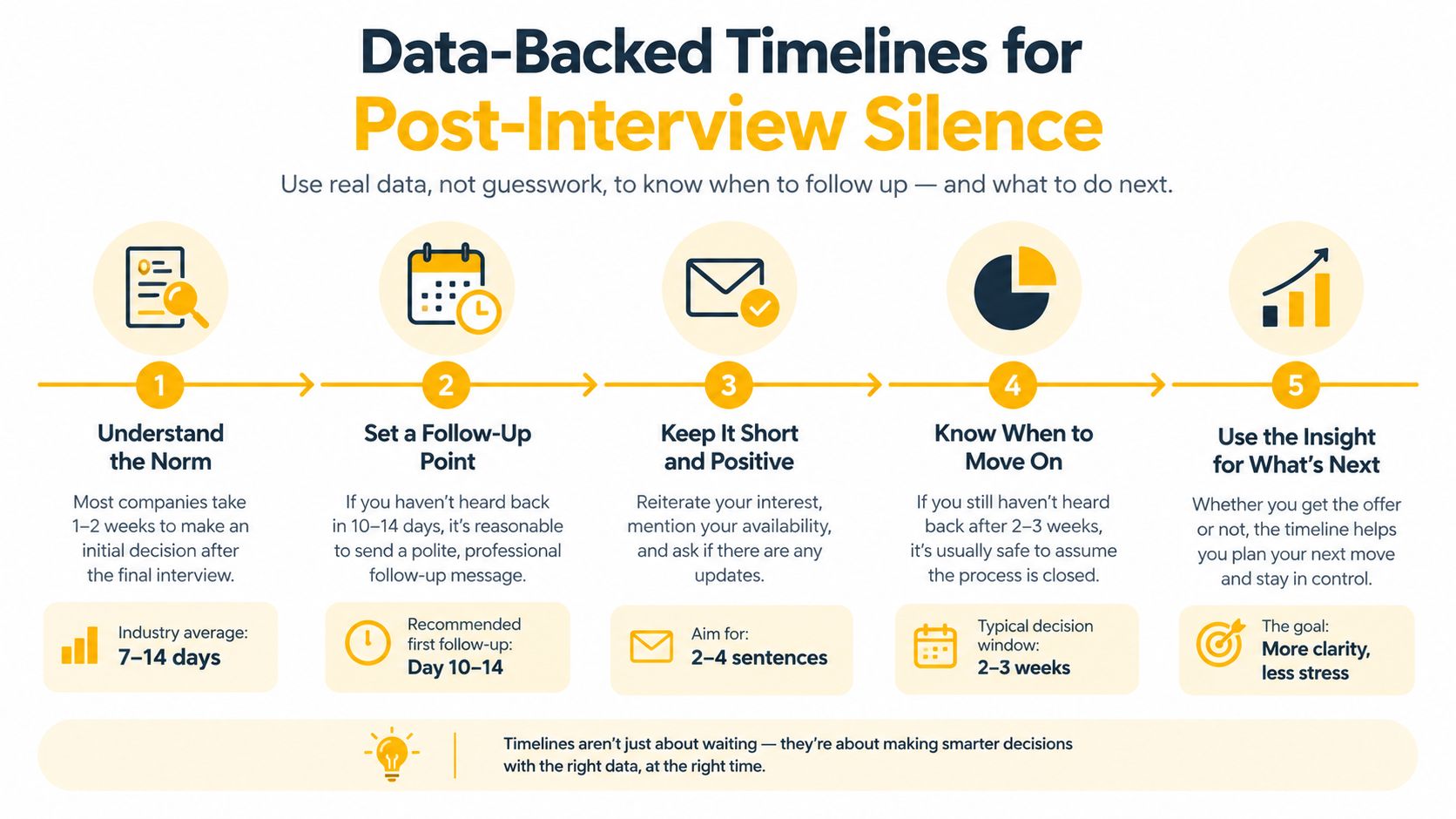
A Virtual Vocations summary of employer ghosting survey results reports that 36% of candidates expected follow-up within one week after an interview. That expectation is reasonable. It also doesn't mean a short delay proves the process is dead.
Use a staged interpretation rather than a binary one:
- Before the promised date: Wait. The employer still has time to meet its stated commitment.
- Immediately after the promised date: Send one concise check-in that names the role and interview date.
- After roughly one week of silence: Assume the process may be delayed and continue other interviews without waiting for permission.
- After the employer's stated deadline has passed and follow-up receives no response: Escalate once through an appropriate stakeholder.
- After the formal ghosting window: Record the outcome and close the process for planning purposes.
The threshold that changes your behavior
GhostedBy uses a 21-day window after the last relevant contact before silence can count as ghosting. That's a useful record-keeping threshold, but don't confuse it with a waiting instruction. You should stop emotionally holding the role open much earlier.
A week without news can be administrative lag. It can also be the first sign that the hiring team has lost control of the process. The right response is to lower the role's priority in your personal pipeline, not to declare with certainty that you've been rejected.
The GhostedBy guide to how long to wait after an interview offers a practical way to think about the distinction: continue pursuing clarity, but stop making plans that depend on an employer that hasn't responded.
The evidence shows why this discipline matters. Greenhouse recorded a nine-point rise in post-interview ghosting since April 2024 in its 2024 research. A separate Indeed hiring report found that 61% of U.S. job seekers had ghosted between two and four employers in the past 12 months, while 83% of employers said candidates had ghosted them. Hiring silence is part of a broader two-sided communication failure, not an unusual personal misfortune.
The Follow-Up and Escalation Sequence
Your follow-up should create a clear decision point. It shouldn't read like a plea for reassurance, and it shouldn't become a stream of increasingly anxious messages. Use a sequence with a defined purpose at each stage.
Start with a precise check-in
Send the first message after the employer's promised update date, or after enough time has passed for the team to make progress. Keep it short:
Subject: Following up on the [Role] final interview
Hi [Recruiter],
I'm following up on my final interview for the [Role] position on [Date]. I remain interested in the opportunity and would appreciate any update on the decision timeline. Please let me know if the team needs anything else from me.
Best,
[Name]
The message does three things. It reminds the recruiter where your candidacy sits, gives them an easy way to disclose a delay, and creates a written record of your attempt to obtain closure. Don't apologize for following up. You're asking the employer to meet its basic communication responsibility.
For additional guidance on wording and timing, use this job application follow-up framework, then adapt it to the exact promise the recruiter made.
Escalate carefully, not noisily
If the recruiter remains silent, contact one relevant alternative stakeholder. The hiring manager is usually the strongest choice because they own the hiring decision, although a recruiting coordinator may be appropriate when scheduling and process administration sit outside the recruiter's role.
Your message should remain respectful and factual:
Hi [Hiring Manager],
I enjoyed speaking with you and the team about the [Role] position. I haven't received an update on the timeline, so I wanted to check whether the search is still active. I'd appreciate any clarity you can share.
Best,
[Name]
Don't message several people at once. Multiple simultaneous contacts can make a reasonable follow-up look like pressure. One thoughtful escalation gives the company a final opportunity to explain what happened.
Close the loop and reclaim your time
If nobody responds, send one final note. You don't need to formally withdraw unless you want to. You can state that you're moving forward with other opportunities and leave the door open if the role becomes active again.
Subject: Closing the loop on the [Role] process
Hi [Recruiter],
Since I haven't received an update, I'm going to assume the search is paused or has moved in another direction and will continue with other opportunities. I appreciated the conversations with the team. If the role reopens or the timeline changes, you're welcome to contact me.
Best wishes,
[Name]
Then stop pursuing the employer. Automated replies, out-of-office notices, and a genuine update are useful signals. Continued silence after a clear final message is a decision about how you should allocate your attention.
Documenting Outcomes to Build Market Transparency
A silent employer gets a second advantage when candidates let the experience disappear. The company avoids accountability, and the next applicant enters the same process without knowing what happened to people who came before them.
Record the role even if you never receive a formal rejection. Save the company name, position, application date, interview stages, last contact, promised follow-up date, messages sent, and final outcome. A private spreadsheet works. So does Notion, Airtable, a calendar system, or a dedicated job-search tracker.
The important point is consistency. Your memory will soften the details once you move on, especially if another opportunity becomes urgent. A structured record preserves the facts without requiring you to write an angry review.
Track outcomes, not impressions
Traditional employer review sites tend to mix opinions about culture, management, compensation, and interviews. Those perspectives can be useful, but they don't answer the narrower question candidates face before applying: Does this company close the loop?
Outcome tracking asks a simpler question. Did the employer respond, close the process, or go silent after the last relevant contact? That structure makes records easier to compare and less dependent on rhetorical skill or emotional intensity.
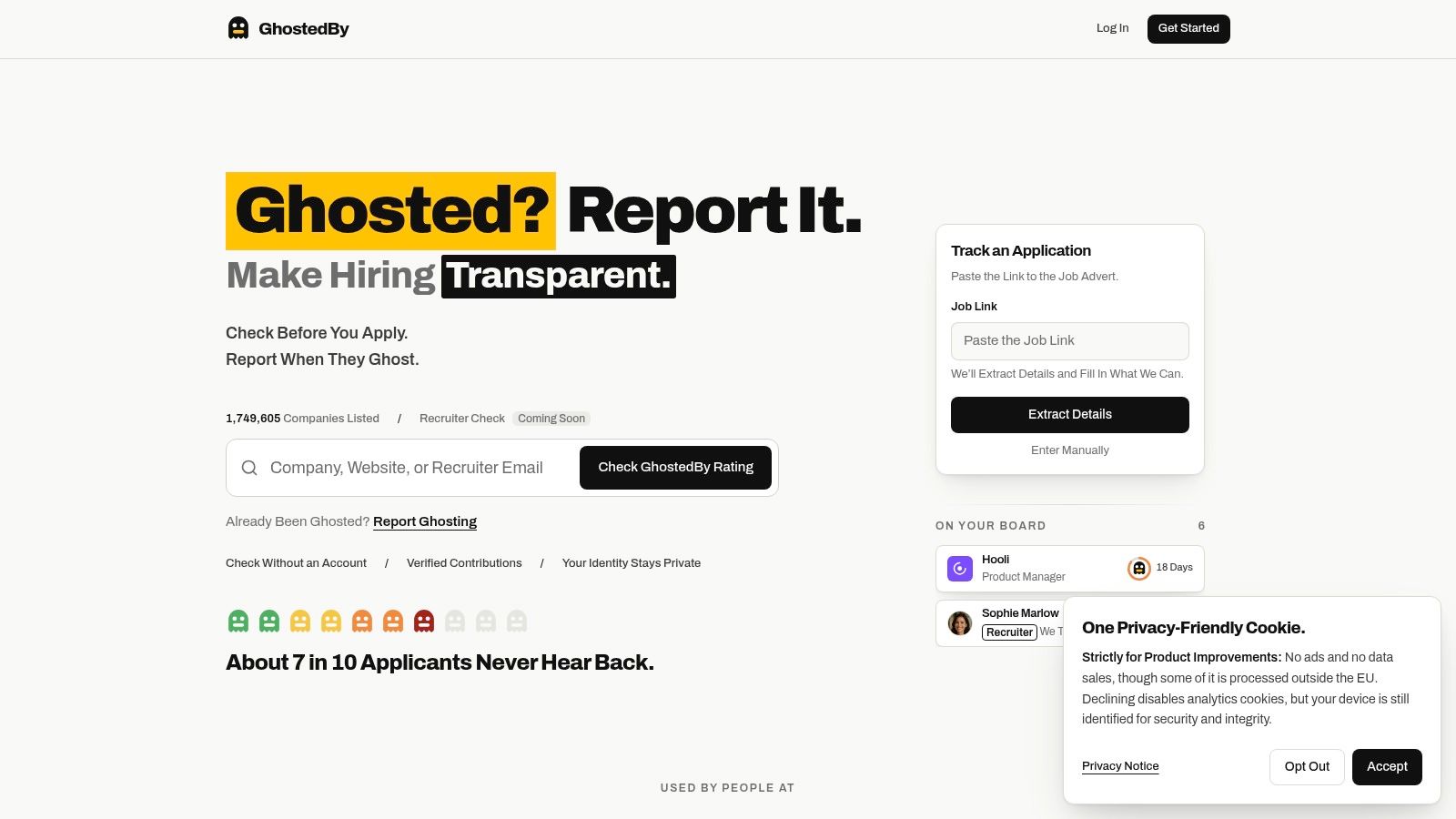
GhostedBy publishes aggregated outcomes rather than written reviews. It requires at least five eligible outcomes before showing a Ghosted Rating percentage, which keeps individual experiences private by default and prevents a tiny number of reports from creating a misleading public percentage.
Turn one bad experience into usable evidence
A record helps you in three ways:
- Protect your time: Before applying again, check whether the company has a pattern of unanswered applications or stalled interview processes.
- Improve your decisions: Compare candidate experience alongside role fit, compensation, location, and manager quality rather than treating the employer's brand as the whole story.
- Contribute without exposing yourself: Aggregated reporting can inform other candidates while keeping your individual application, identity, role, and dates private.
Use a job application tracking system to connect interview stages with dates and outcomes. You can also build the same habit manually. What matters is that every final interview receives a status, even when the employer refuses to provide one.
Don't exaggerate. Don't infer motives you can't verify. Record the contact history, apply the published waiting rule consistently, and distinguish “no response yet” from “confirmed rejection.” Accurate records create more leverage than dramatic commentary because they show what the company did.
Auditing Your Funnel and Rebuilding Momentum
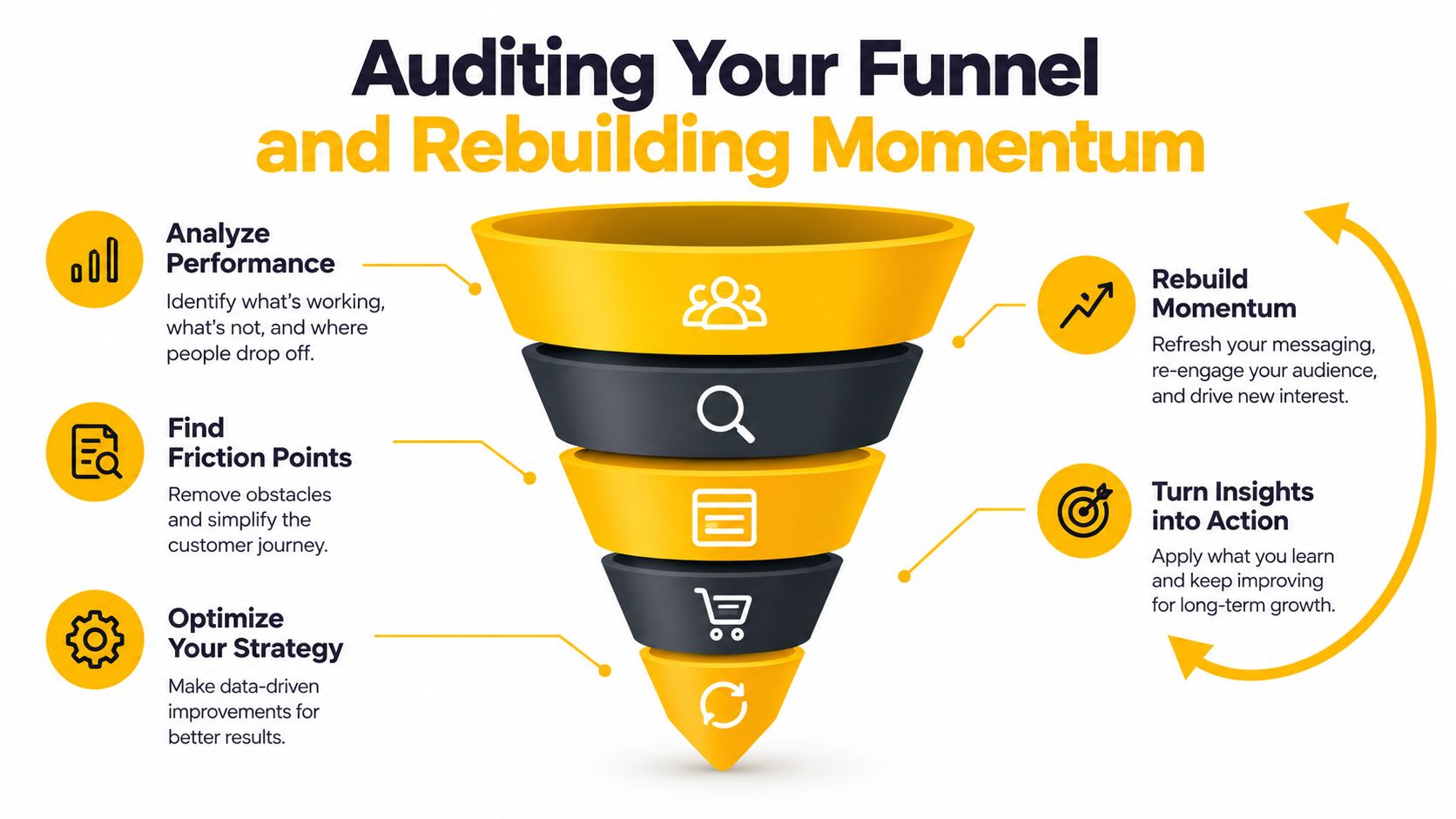
Getting ghosted at the finish line deserves a process audit, but it doesn't justify a complete rewrite of your career strategy. One employer's failure can reveal a weakness in your search, or it can reveal a weak employer. Your job is to determine which.
Start with the stages you control. Review your applications, recruiter screens, hiring-manager conversations, technical exercises, final interviews, and outcomes. Look for repeated patterns rather than obsessing over a single silent company.
| Funnel signal | What it may indicate | Your next move |
|---|---|---|
| Few screens from many applications | Targeting, positioning, or résumé problem | Tighten role criteria and rewrite evidence around relevant outcomes |
| Many screens but few first interviews | Weak initial narrative or unclear experience match | Practice a sharper value proposition |
| Several final rounds without offers | Closing, references, compensation, or finalist differentiation may need review | Ask for feedback and rehearse decision-stage conversations |
| Repeated silence from the same type of employer | Candidate-experience or process risk | Research communication records before investing more time |
Don't invent a conversion rate from a small sample. Look for recurring friction. If multiple companies ask about the same missing skill, that's a development signal. If interviewers repeatedly praise your experience but never clarify the decision process, improve your questions about ownership, timeline, and approval.
Keep the search moving while one process stalls
A final round creates a dangerous emotional illusion. It feels close enough to an offer that candidates reduce outreach, pause applications, and start planning around a result they don't control. Reverse that behavior immediately after the interview.
Maintain several kinds of activity:
- Replacement applications: Add new roles whenever an employer misses its communication commitment.
- Warm outreach: Contact former colleagues, professional communities, and relevant hiring managers with a specific reason for reaching out.
- Interview calibration: Write down the questions you struggled with while the conversation is fresh.
- Company screening: Investigate candidate experience before committing to unpaid exercises, extensive presentations, or multiple panels.
Reset without pretending it didn't hurt
You invested preparation, time, and hope. Detachment doesn't require pretending the experience was insignificant. It means assigning the disappointment a boundary.
Write a factual outcome note, send the final follow-up, and schedule the next search action. Don't let an unanswered email become the central story you tell yourself about your employability. The employer may have malfunctioned, but your pipeline can still operate with discipline.
Turning Candidate Frustration into Leverage
A candidate who tracks applications has more control than a candidate who relies on memory and optimism. After a final-round process collapses, the record tells you what happened, what you asked, how long you waited, and whether the employer eventually responded. That information improves your next decision even when it can't change the last one.
Consider two job seekers who receive identical silence. One keeps the role at the top of the list, declines another conversation, and tells friends only that the company “felt disorganized.” The other logs the final interview, records the missed promise, sends a structured escalation, closes the loop, and checks the employer's future candidate-experience record before applying again. The second person hasn't controlled the company's behavior. They've controlled the cost of that behavior.
That's the long-term advantage of treating job-search data as a personal asset. You can identify employers that communicate clearly, recognize recurring process failures, and ask sharper questions before investing in a lengthy interview loop. You can also separate a disappointing outcome from a bad decision. Rejection may be frustrating, but unexplained silence tells you something about the organization's operating standards.
Candidates shouldn't have to pay to see how companies treat them, and companies shouldn't be able to pay for a better record. Transparency works only when contributors report accurately, platforms aggregate responsibly, and candidates use the information as one input among several.
Your next interview should include more than preparation for the questions. Ask who owns the decision, what approval remains, when you should expect an update, and what happens if the timeline changes. Then keep applying, keep tracking, and treat every employer's communication behavior as part of the opportunity itself.
GhostedBy lets candidates privately track applications, stages, dates, and outcomes, check company-level response patterns, and report when a hiring process closes or goes silent. Visit GhostedBy to turn your experience of being ghosted after a final round interview into a documented signal you can use in your next search.