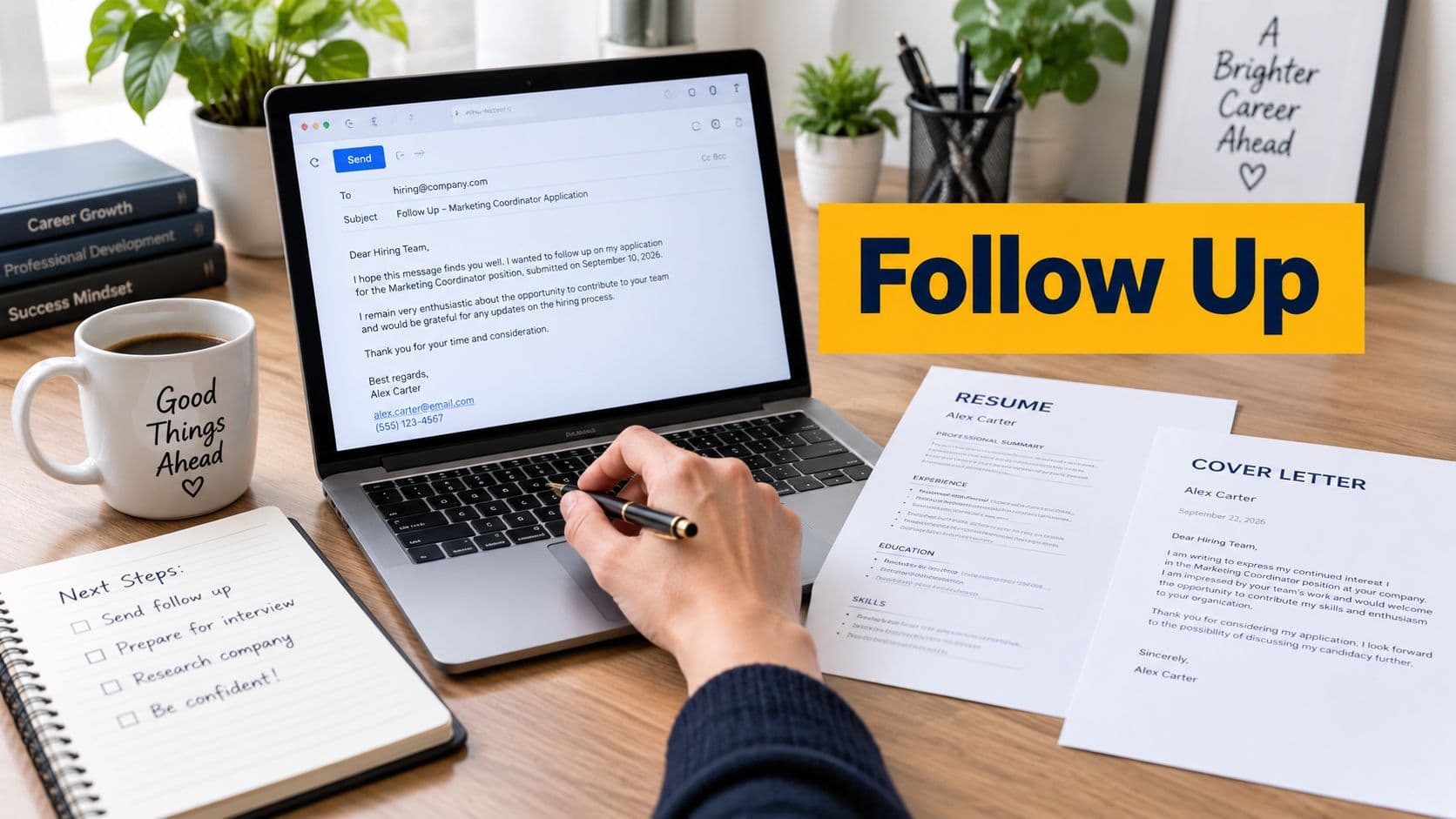
A job application follow up is no longer a manners question. In a 2025 dataset, the median time to hear back was 6.7 days, and the middle half of applicants heard back between 4.5 and 8.1 days careery.pro. That means the first week is not just polite timing, it's the most statistically useful window for reading whether a process is alive.
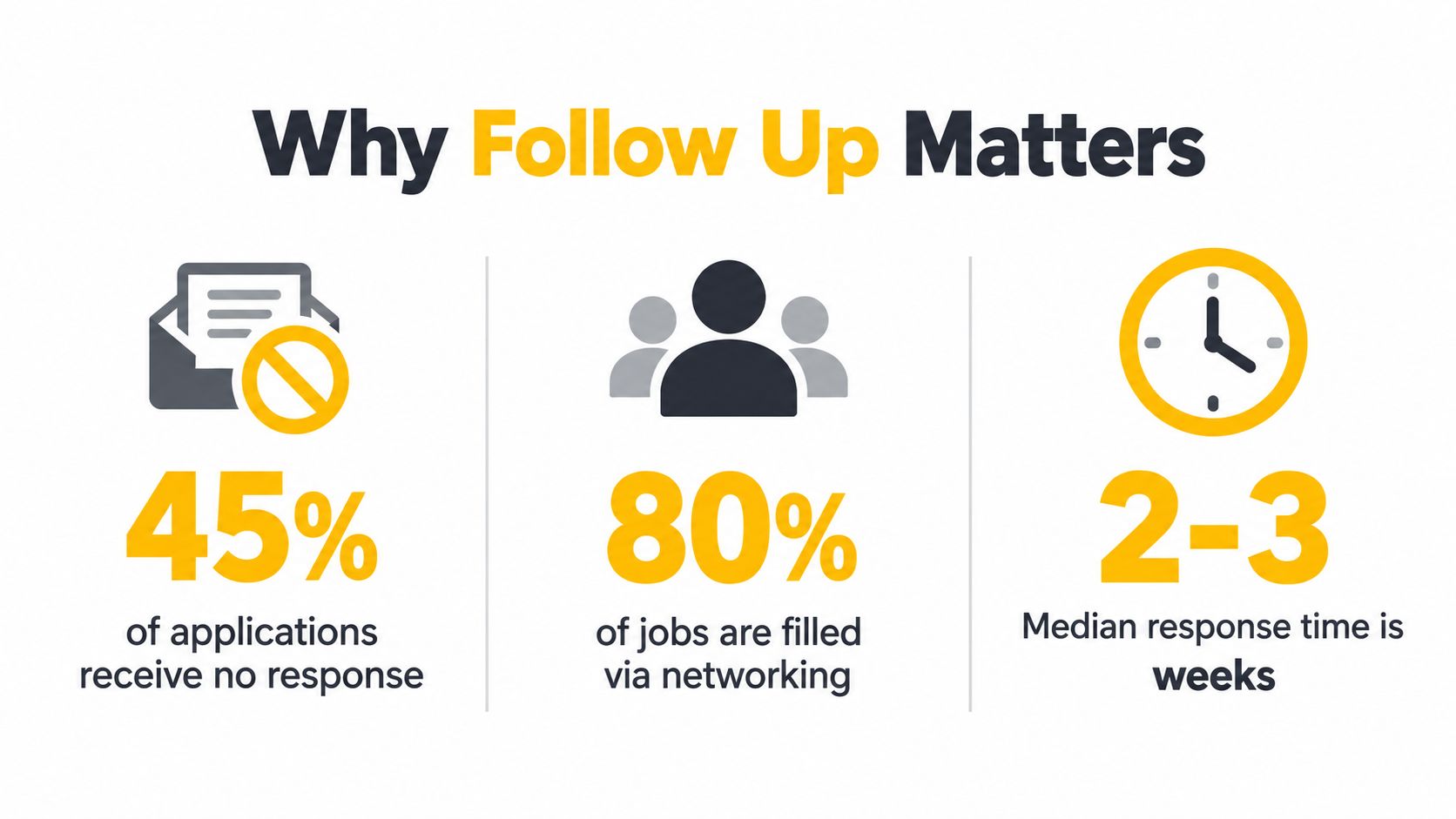
Silence is also normal, which changes the meaning of every message you send. One independent candidate-experience summary found 79% of candidates get no follow-up after applying, and another reported that roughly 75% of job applications receive zero response worldmetrics.org. In that environment, a strong follow up is less about nudging a recruiter and more about testing for signal, then moving with discipline when no signal arrives.
The useful mindset is simple. Read timing, add value, stop when the process goes cold. That shift protects your time, keeps your messages relevant, and helps you avoid both passivity and over-contacting.
Table of Contents
- Why Job Application Follow Up Matters More Than Ever
- When to Follow Up After Applying or Interviewing
- How to Structure a Follow Up That Adds Value
- Why Tracking Matters
- Job Application Follow Up Email Templates and Examples
- Common Follow Up Mistakes and How to Avoid Them
- Tracking Your Follow Ups and Knowing When to Move On
Why Job Application Follow Up Matters More Than Ever
The data puts follow up in a new category: signal reading. When 79% of candidates get no follow-up after applying and roughly 75% of applications receive zero response, silence is no longer an outlier worldmetrics.org. The key question becomes whether the hiring process is still active, or whether the role has already stalled.
Silence is structural, not personal
Job seekers often read silence as a judgment on their candidacy. The pattern is usually more operational than personal. Hiring teams work through heavy volumes, and candidate-experience research now treats response tracking as a hiring-quality signal, not just a courtesy issue worldmetrics.org.
That is why a thoughtful job application follow up has two jobs. It confirms whether the employer is still engaged, and it tells you whether anyone is managing the opening. A reply means movement. No reply gives you a different kind of answer.
Practical rule: a follow up should ask for a signal, not demand a decision.
The timing gap explains why candidates misread the process. A candidate-ghosting analysis found that 75% of applicants expect a reply within two weeks, 58% within one week, while the median response time sits at 6.7 days pin.com. That mismatch makes silence feel more final than it is.
A fuller look at hiring communication patterns on how companies handle candidate response shows the same point from another angle. Many openings go quiet before applicants assume they should.
When to Follow Up After Applying or Interviewing
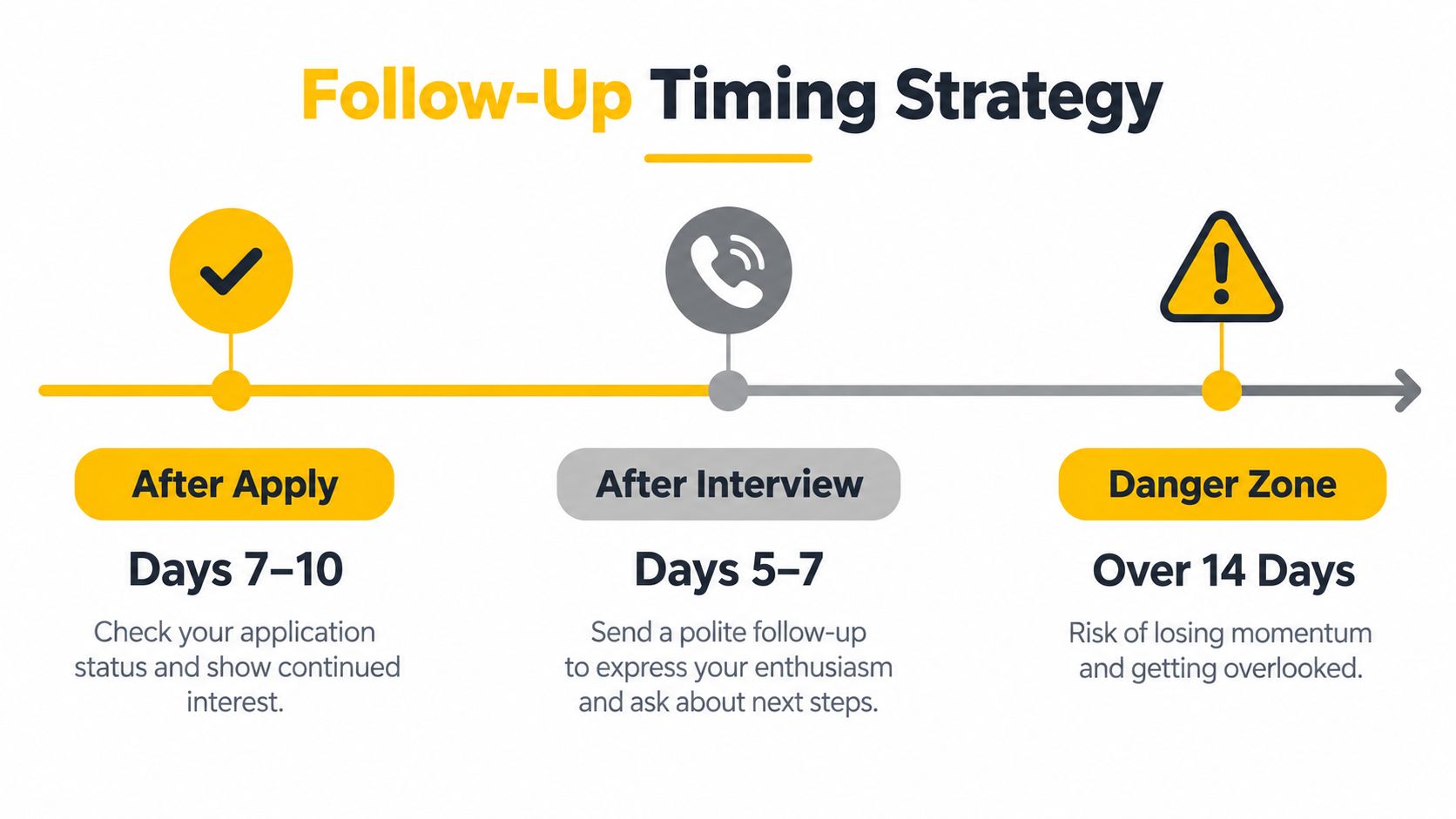
The first response window is shorter than many candidates expect. In a benchmark study of more than 1,000 U.S. job seekers, the median time to a first meaningful employer response was about 6 to 7 days, with about 25% of replies arriving within 4 to 5 days and 75% by day 8 techrseries.com. A separate synthesis reported that about 44% of candidates who do hear back do so within two weeks and recommended one brief follow up in the 7 to 10 day range dreamworkhq.com. The first week is where response signals are most likely to appear.
Reading the day 7, day 14, and day 21 signals
At day 7, you are still inside the main response window. A short follow up fits the timing and does not assume the team has lost interest. By day 14, silence carries more weight. One dataset-oriented source says the probability of a meaningful reply drops sharply after roughly day 14, so waiting much longer usually means the employer has already moved on careery.pro.
By day 21, the question changes. GhostedBy defines an application as ghosted after 21 days without a response following the last relevant contact, which gives candidates a practical cutoff for where to spend attention next. That is not a judgment on your candidacy. It is a signal that the process is unlikely to recover without new information.
Silence after three weeks usually means your next best move is a new application, not another reminder.
After an interview, the timing tightens because the employer already has your context. The same response pattern still applies, but the expected wait is shorter, so repeated checking adds little value. If the process is still active, movement tends to show up quickly. If it does not, the silence is itself a useful signal.
How to Structure a Follow Up That Adds Value
A follow up works only if it gives the hiring team a clean reason to reply. One current benchmark source says about 64.9% of candidate replies to recruiting outreach arrived only after a follow-up message, which shows that a well-timed nudge can still move a stalled process angld.ai. The limit is clear too, because the same source points to weaker returns after a second attempt. That makes follow up a signal-reading exercise, not a persistence contest.
Use a two-touch system
The first message should be a brief reminder with context. The second should add something new, such as a recent credential, a completed project, or a tighter fit point that was not in the original application. If the reply window has gone quiet, see these job-hunting tips for outreach timing before you send more.
A simple structure keeps the note useful:
- Touch one, reminder plus context: confirm the role, the date, and your interest.
- Touch two, value-add note: mention a new credential, a completed project, or a relevant development.
- Stop after that: repeated generic reminders usually read as pressure, not professionalism.
The channel should match the stage. Email works best for formal application follow up because it creates a clean record and is easy to scan. If a recruiter reached out on another channel, mirror that channel once, then return to email if needed. That keeps the exchange consistent without turning it into scattered pings across multiple platforms.
Why Tracking Matters
The difference between a useful follow up and a random ping is usually the record behind it. If you do not know the role, the date applied, or the stage, even a careful message can go to the wrong place. Tracking turns follow up into signal-reading instead of memory work, and it shows when silence is a delay versus when it is a pattern.
GhostedBy's Private Application Board keeps roles, stages, dates, and outcomes in one place. Its 21-Day Ghosting Window also makes prolonged silence visible, so you can separate a slow process from one that has likely stalled.
GhostedBy's company-hiring-practices record adds another layer by showing candidate experience at the company level, instead of forcing each applicant to guess alone.
A simple workflow that stays accurate
Record the basics the day you apply, job title, company, date applied, and any job ID or application link. Add the source too, whether that was a portal, recruiter, or referral, so you know which thread to reopen later.
If the details are not current, the follow up is guesswork.
Set a reminder for the first week, then check the three-week mark if nothing has come back. That gives you a clean point to send one more note, then stop if the silence continues. It also keeps one stalled application from crowding out better leads.
If you want a cleaner way to manage that process, GhostedBy gives candidates a private board, outcome tracking, and a way to review how companies handle silence before you spend more time.
Job Application Follow Up Email Templates and Examples
A good template should sound like a person, not a queue ticket. Keep the structure tight, then swap in only the details that matter. Subject lines should be blunt and searchable, because hiring teams skim inboxes fast.

One week after applying
Subject: Follow up on [Job Title] application
Hello [Hiring Manager Name or Team],
I applied for the [Job Title] role on [Date] and wanted to follow up on the hiring timeline. I'm still very interested in the position and would appreciate any update on next steps.
Thank you for your time.
Best,
[Your Name]
This version works because it's short, specific, and easy to route internally. It doesn't over-explain your background, and it doesn't beg for a response.
After an interview
Subject: Thank you and follow up on [Job Title]
Hello [Hiring Manager Name],
Thank you again for speaking with me about the [Job Title] role. I wanted to check whether there are any updates on the timeline for next steps. I remain very interested and'm happy to provide anything else you need.
Best,
[Your Name]
Use this when the employer has already interacted with you and the conversation has entered the decision phase. The tone should stay warm, but the ask stays narrow.
After recruiter outreach or a final check-in
Subject: Follow up on [Job Title]
Hello [Recruiter Name],
I'm following up on my application for the [Job Title] role submitted on [Date]. If there's anything else you need from me, I'd be glad to provide it.
Thank you,
[Your Name]
That version is useful when you want one clean last touch. If you've already sent two messages and still haven't heard back, stop there and redirect your energy.
Common Follow Up Mistakes and How to Avoid Them
The worst follow up errors are usually timing mistakes, not writing mistakes. People send too early, write too much, or keep pushing after the process has gone quiet. All three cost goodwill.
| Decision Point | What Works | What Hurts |
|---|---|---|
| Timing | Waiting about a week after applying, then reassessing at two and three weeks | Following up the same day or sending repeated pings every few days |
| Subject line | Clear role name and purpose | Vague lines like “Checking in” with no context |
| Message length | Short paragraphs and one clear ask | Long explanations, multiple asks, or a full life story |
| Tone | Calm, specific, easy to answer | Pushy language, guilt, or pressure |
| Second touch | Add new information or renewed interest | Copying the first message with different wording |
The expectation gap is the trap. A lot of candidates feel ghosted after a week because the process is emotionally active for them, even when it's still moving slowly for the employer. That feeling is real, but it doesn't always mean the process is dead.
The safest move is to avoid self-selecting out too early or persisting too long. One well-timed follow up, one value-add touch, then move on is usually the cleanest pattern.
Tracking Your Follow Ups and Knowing When to Move On
The candidates who stay calm through long hiring cycles usually run a system, not a memory test. They keep applications, dates, and last-contact notes in one place, so each message matches the actual stage. That matters more than perfect wording because it protects you from duplicate outreach and stale details. A private tracker also makes it easier to spot when a process has drifted past the point where your effort is still earning a return. This tracking guide is a practical starting point if you want a simple way to organize that workflow.
A clean decision process
Use a short checklist every time you're about to send a follow up:
- Confirm the role: check the title, company, and stage.
- Check the date: if it's been about a week, one follow up is reasonable.
- Add value on the second touch: include something new if you reach out again.
- Stop at the ghosting window: after 21 days without a response following the last relevant contact, shift your attention.
- Log the outcome: record whether the employer replied, stayed silent, or closed the loop.
That approach turns follow up into a workflow instead of an emotional habit. It also helps you compare companies on how they treat applicants, which is the signal under the etiquette. When the record is clear, you can spend less time wondering and more time applying where the process still has momentum.
If you want a cleaner way to manage follow up timing, application status, and silence in one place, visit GhostedBy. It gives candidates a private board, outcome tracking, and a way to see when silence crosses the 21-day ghosting window so you can stop guessing and keep moving.