The largest job board isn't automatically the best job search app. A platform can expose you to thousands of listings and still leave you with duplicated applications, unclear next steps, and no useful signal about what happens after you click Submit.
A better comparison looks at discovery reach, application friction, tracking support, candidate-experience visibility, audience fit, limitations, and pricing. Mobile access matters because 52% of job seekers use mobile apps for job searching, while nearly 56% apply through mobile apps or online job boards rather than traditional methods, according to job-search statistics from ZipDo. The category is also global, with more than 1.6 billion people using online job platforms to search for work, according to the same source.
That doesn't mean you need ten apps open at once. You may combine one broad marketplace with a specialist platform and a private application tracker. The list below starts with decision support and post-application visibility, then moves through general discovery, employer research, flexible work, hourly jobs, graduate recruiting, startups, and technical careers.
Table of Contents
- 1. GhostedBy
- 2. LinkedIn Jobs
- 3. Indeed Job Search
- 4. ZipRecruiter Job Search
- 5. Glassdoor
- 6. FlexJobs
- 7. Snagajob
- 8. Handshake
- 9. Wellfound
- 10. Dice
- Top 10 Job Search Apps Comparison
- Build a Job Search Stack You Can Actually Maintain
1. GhostedBy
More listings do not necessarily produce better applications. GhostedBy addresses the stage that job boards usually leave unclear: what happens after candidates apply? It combines employer communication data with application tracking, helping candidates judge both whether a role is worth pursuing and what follow-up may look like.
Instead of relying on subjective workplace reviews, GhostedBy publishes aggregated candidate outcomes. These reports show how often applicants say they received a response or were ghosted. Search by company name or website, check the available Ghosted Rating, and decide whether the reported communication pattern justifies tailoring a resume, completing an assessment, or entering an interview process.
A rating does not predict an individual result. It does provide candidate-experience context that a listing page rarely offers. That distinction makes GhostedBy most useful before application effort is spent, rather than as a replacement for broad job discovery.
The product also supports the workflow after submission. Its Application Board records roles, stages, dates, and outcomes. Automatic email-linked tracking connects job-related messages to the relevant application, preserving visibility when several applications move through different stages. The optional Agentic Inbox reduces the need to search through a crowded mailbox.
What makes GhostedBy different
- Outcome-based transparency: Aggregated response and ghosting outcomes describe reported hiring communication rather than opinions about workplace culture.
- Privacy-first tracking: Contributors verify their email addresses, while individual identities, applications, roles, and dates remain private.
- Free core access: Company checks, application tracking, and outcome reports are free. The optional Agentic Inbox costs $4 per month while you need it.
- Clearer thresholds: A company needs at least five eligible outcomes before a percentage rating appears. Until then, raw counts provide context.
- Defined ghosting window: Silence can count as ghosting after 21 days without a response following the last relevant contact.
Coverage remains the main limitation. Smaller employers may lack enough eligible data for a percentage, and verified self-reporting does not independently prove that someone applied. The absence of written reviews also leaves the reasons for a failed process unexplained.
GhostedBy fits candidates managing multiple applications, career coaches, and anyone who wants employer research to include communication reliability. It belongs near the evaluation and tracking stages of a job search, while a larger marketplace remains better for initial discovery.
2. LinkedIn Jobs
LinkedIn Jobs is more than a listing feed. Its professional identity layer makes it particularly useful for mid-career and senior candidates, people changing industries, and applicants who can use mutual connections to assess an employer before applying.
The Jobs tab offers saved roles, alerts, recommendations, and applications through a profile or resume. Easy Apply lowers application friction for selected listings, while other employers send candidates to an external applicant-tracking system. That split can reduce tracking visibility, so candidates should record each submission in a separate tracker. Company connections add a second workflow: a listing can lead to a referral request or an informal conversation with someone familiar with the team.
LinkedIn's scale supports discovery. One 2026 comparison of job search apps reports more than 1 billion Google Play installs and a 4.8 App Store rating. The same source records 369,887 tracked saves and a 3.4% interview rate in one application analysis. These figures describe that analysis, so they indicate reach and observed activity rather than an individual candidate's likely outcome.
Best use and main trade-off
LinkedIn works best when discovery, professional context, and relationship-building happen together. A complete profile can improve recruiter visibility, while messages, referrals, and company connections help candidates judge fit before investing time in an application. Premium Career adds optional tools such as InMail, applicant insights, and job-search guidance. Its value depends on active use.
Listing quality varies, and changes to LinkedIn's AI and job-search experience can make the workflow feel inconsistent. Treat LinkedIn as both a marketplace and a networking channel, and move serious applications into your own tracking layer. This guide to searching for a job offers a practical framework for coordinating profile activity, outreach, and applications.
3. Indeed Job Search
Indeed earns its place through breadth, though broad coverage creates a second problem: candidates can collect applications faster than they can evaluate or track them. The app spans industries, locations, experience levels, and employment types, making it a useful discovery layer for a wide search.
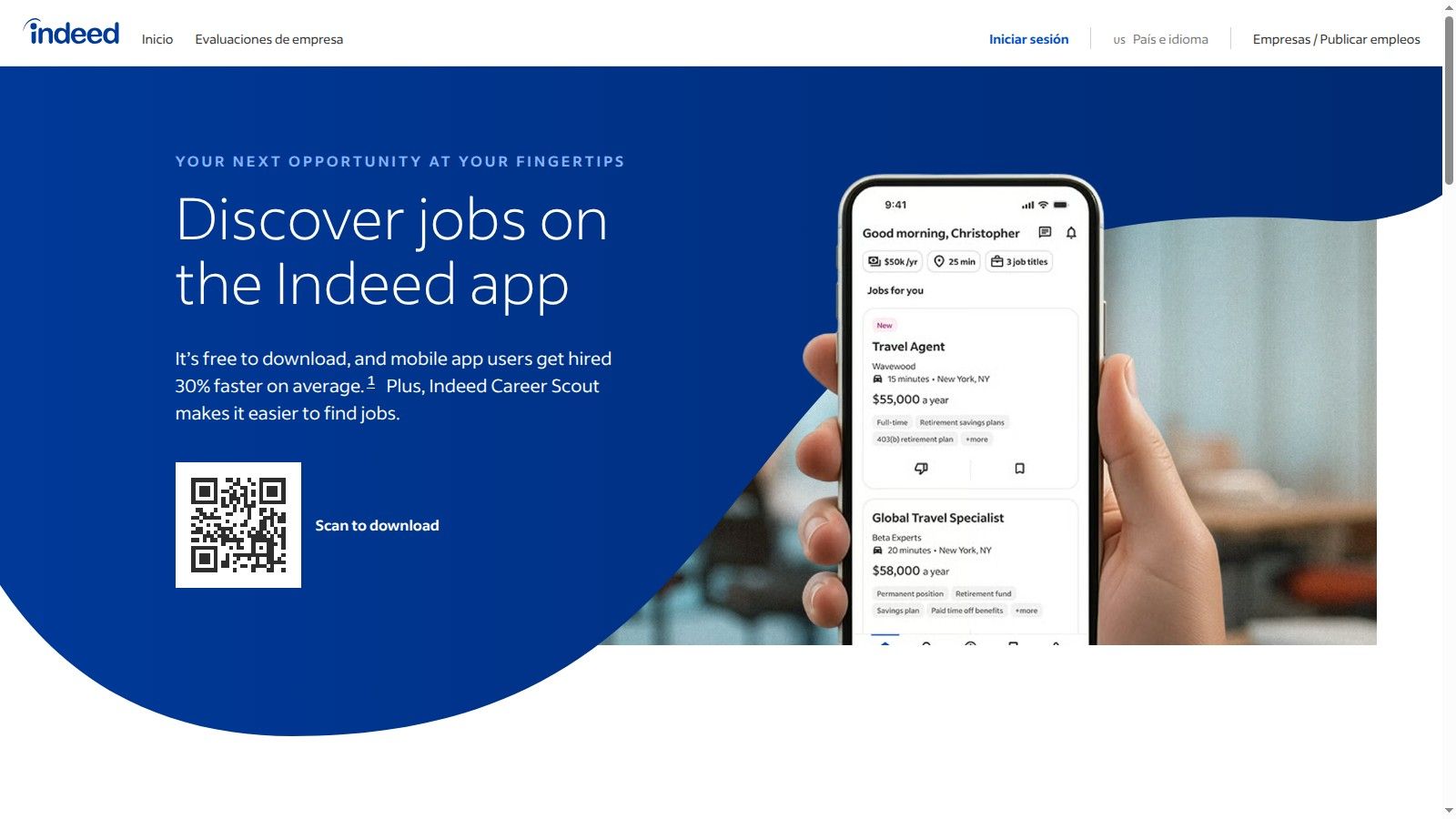
The Indeed Job Search app offers personalized recommendations, saved searches, alerts, and in-app applications for many listings. Other roles redirect to an employer website, splitting application history across Indeed and external systems. Career Scout, Indeed's AI assistant, supports role discovery and applications, but candidates should still review job details and answers before submitting.
The platform's reach helps explain its appeal. Indeed app data summarized by Apollo Technical reports more than 417 million monthly visitors, while a cited market breakdown places Indeed at 32.34% of job-board market share. These figures describe audience reach, not application quality, employer responsiveness, or interview probability.
Where Indeed earns a place
Indeed fits candidates searching across regions, industries, hourly work, and professional roles. Frequent alerts support discovery, especially when the search spans employers outside one professional network. Its trust and safety operation removes listings that lack legitimate hiring intent, while redirect-heavy listings still deserve a domain check.
The main trade-off is visibility after applying. Indeed makes finding opportunities easy, but external destinations can obscure status and follow-up timing. Pair it with a structured application tracker, recording the employer, role, application date, destination site, and current stage immediately after each submission. That workflow preserves a clear record while Indeed handles broad discovery.
4. ZipRecruiter Job Search
ZipRecruiter prioritizes application speed and matching over extended employer research. Its one-tap apply flow and profile-based recommendations fit candidates with defined target roles who want to act quickly when a suitable listing appears.
The app adds a useful decision signal after submission: it can notify applicants when an employer views their application. A view does not indicate interview intent, but it helps separate applications that received initial attention from those still awaiting review. That distinction makes it easier to allocate follow-up time instead of treating every submission identically.
ZipRecruiter operates at substantial scale. The platform says it has served more than 110 million job seekers and works with more than 2.8 million businesses. A comparison from Apollo Technical also cites more than 157 million job seeker profiles, figures that help explain the product's emphasis on matching.
The speed trade-off
ZipRecruiter works best with a complete, current profile and a review step before submission. One-tap applications reduce repetitive work, yet they can also increase application volume faster than tailoring quality. Redirects to employer sites add another handoff, and listing quality still depends on the hiring organization.
Use ZipRecruiter for rapid discovery, then place serious applications in a separate pipeline with the employer, role, submission date, and current stage. If a viewed application receives no response after one week, choose between one polite follow-up and moving it to the back of your pipeline. That action keeps the app's feedback useful without treating a view as progress.
5. Glassdoor
Glassdoor belongs earlier in the decision process than many candidates use it. Its strongest contribution isn't another stream of listings. It's the ability to investigate a company, compare compensation information, and read workplace discussions before you commit time to an application or interview.
The mobile experience combines job alerts with company reviews, ratings, salary tools, and workplace conversations connected with Fishbowl. Anonymous Q&A and peer discussions can help you test assumptions about management, interview practices, and team expectations. That context is imperfect, but it gives candidates questions to ask instead of entering every process with only the employer's description.
Research before commitment
Glassdoor works best beside a discovery app such as Indeed or LinkedIn. Find a role elsewhere, then use Glassdoor to examine the employer's public signals and think through culture and compensation fit. It can also help you prepare for an interview by identifying recurring themes, although you shouldn't treat every anonymous comment as verified fact.
The platform's post-Fishbowl integration has changed the product dynamics for some users. Identity requirements can also feel sensitive, even when parts of a profile remain hidden. Candidates who want employer context without relying on traditional written reviews can compare Glassdoor with a candidate-experience alternative, especially when their main concern is whether employers communicate after applications.
6. FlexJobs
FlexJobs takes the opposite approach to a general job aggregator. It prioritizes curation for remote, hybrid, part-time, and flexible work, with listings screened to remove scams. That narrower inventory can save time for candidates whose primary requirement is a legitimate flexible arrangement.
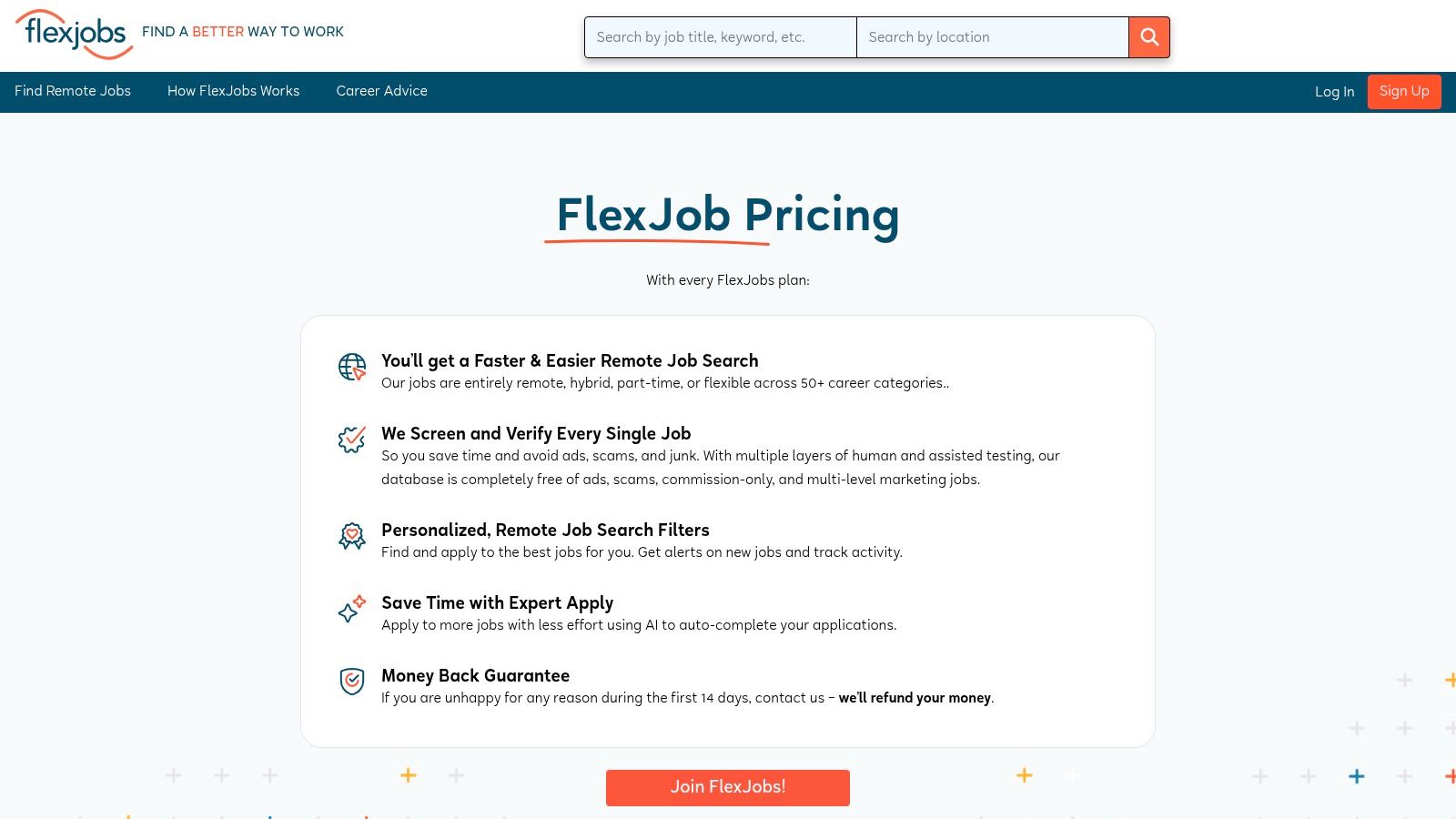
The service provides advanced filters and alerts for flexible work categories, and its AI Expert Apply helper is intended to streamline applications. A 14-day money-back guarantee or trial gives users a way to evaluate the service before making a longer commitment, according to its pricing information.
Paying for a cleaner search
FlexJobs requires a paid subscription, so its value depends on how much time you lose to questionable or irrelevant listings on free platforms. Candidates looking for remote work may prefer a smaller, screened pool over the larger but noisier inventory of a general marketplace.
The trade-off is reach. Curation necessarily means fewer total listings, and not every role will appear there. Use FlexJobs when work arrangement is essential, not as the only app for a broad career transition. Before applying, still check the employer's own career page and record the application outside the platform if the process leaves FlexJobs.
7. Snagajob
Snagajob is built for hourly work, including retail, restaurants, hospitality, customer service, and seasonal roles. Its focus makes it more useful than a general professional network when proximity, shift compatibility, and application speed matter more than a polished career profile.
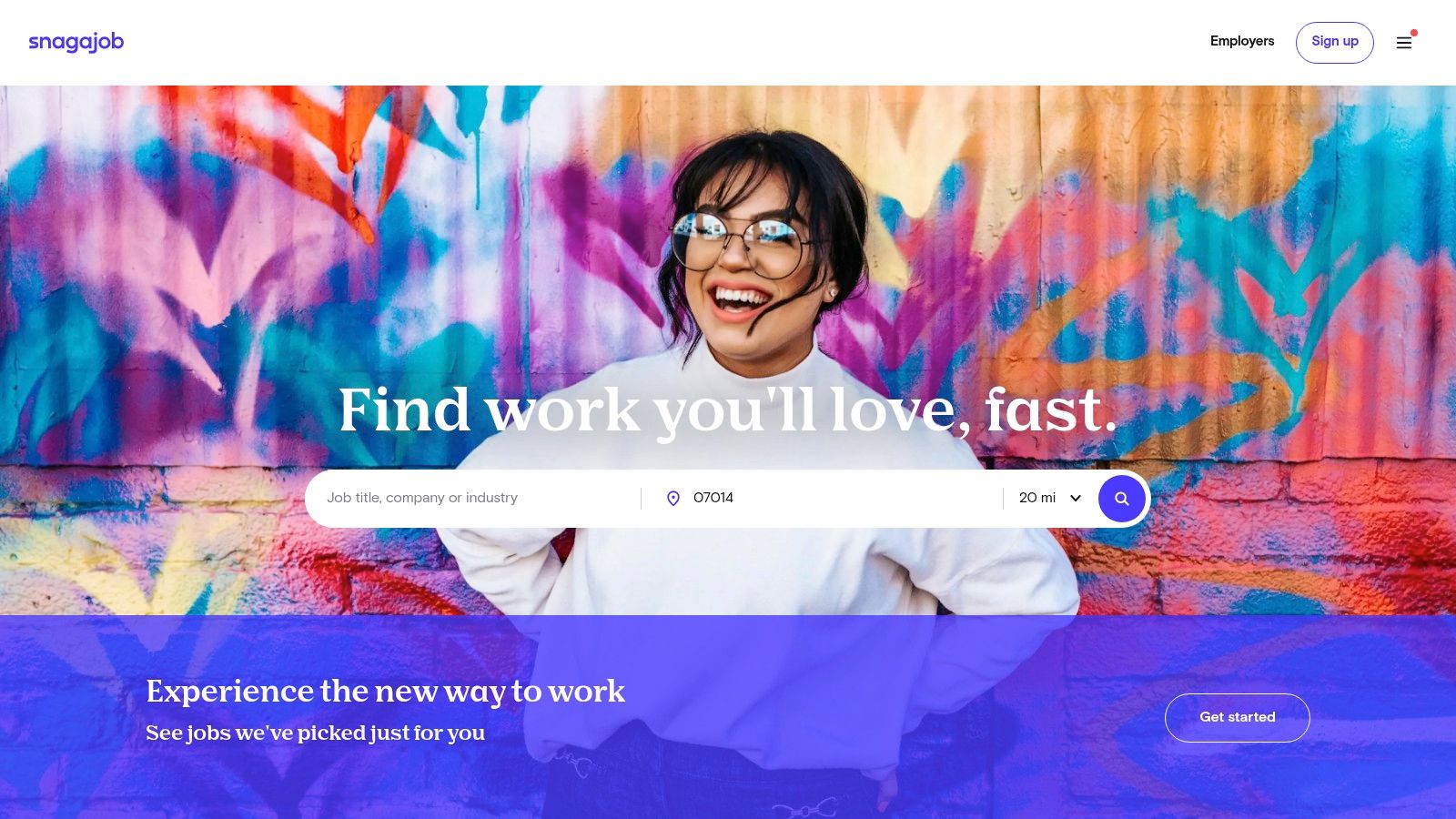
The mobile experience centers on local discovery. Map search and daily matches help candidates see nearby opportunities, while one-click applications and status updates reduce the distance between finding a role and expressing interest. That local orientation is a meaningful advantage for applicants who need work within a practical commuting area.
Read the listing carefully
Snagajob's specialization reduces irrelevant office and knowledge-work listings, but it doesn't remove every source of uncertainty. Some employers keep evergreen listings open, which can make an opportunity appear more active than it is. Other applications route to an external employer site, so the visible status inside the app may not tell you the full story.
Use Snagajob for nearby hourly discovery, then confirm the location, schedule, pay information, and application destination. Candidates should also maintain their own record of submissions, particularly when applying to several locations for the same employer.
8. Handshake
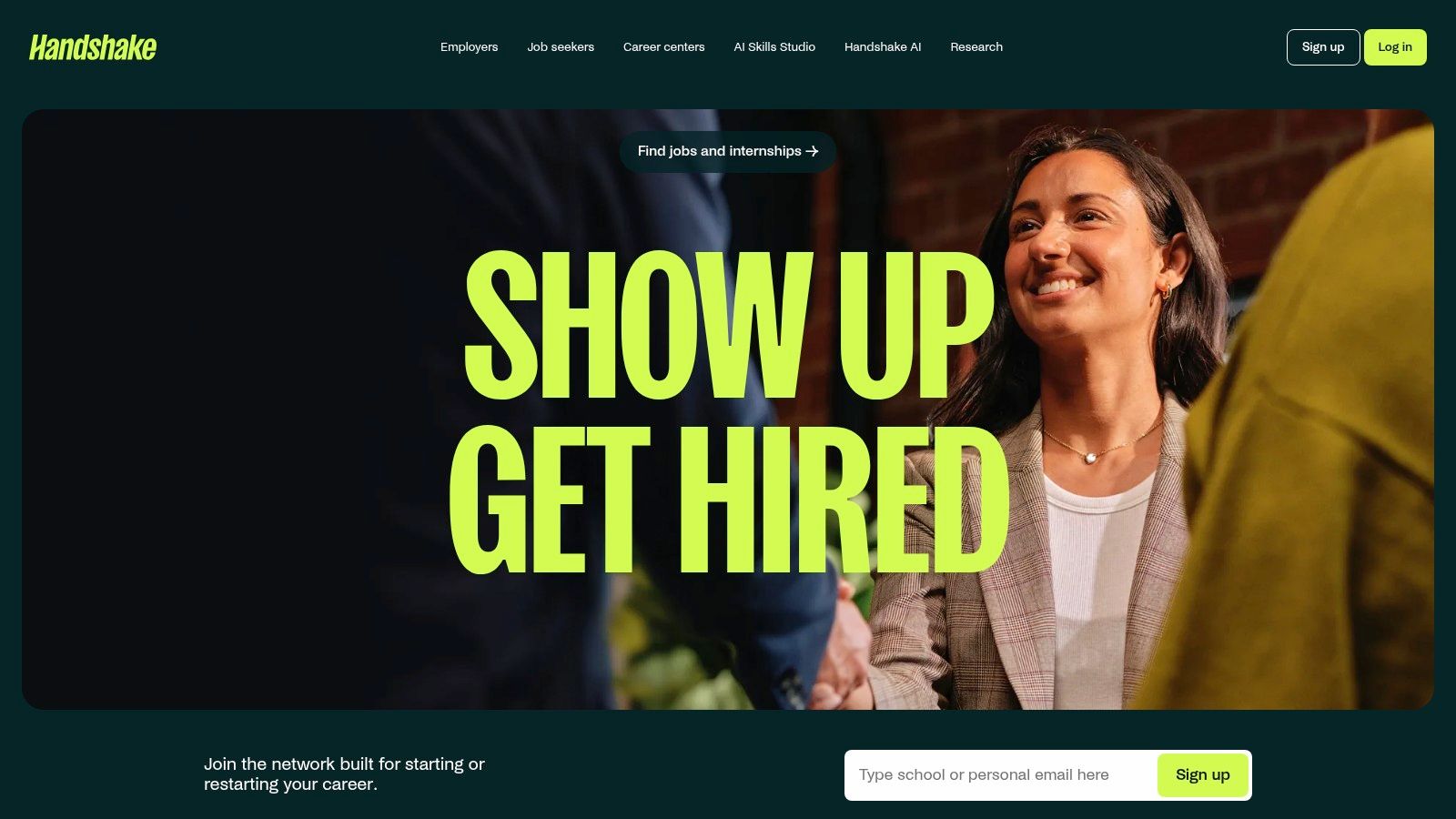
Handshake is designed around students and recent graduates rather than the general labor market. Its value comes from the connection between campus recruiting, employer messaging, career resources, virtual events, and early-career opportunities.
Students can receive personalized job recommendations, engage with employers, attend virtual career fairs, and use university-linked recruiting pipelines. That structure gives new candidates more guidance than a completely open marketplace, particularly when they haven't yet developed a professional network or a clear understanding of entry-level hiring.
Fit depends on affiliation
Handshake's main limitation is also its differentiator. Access to some features remains tied to a school relationship, and the platform is less useful for mid-career candidates. A student should use it alongside campus advisers, employer events, and a general job board rather than treating it as a universal replacement.
For internships and new-graduate roles, direct employer outreach can matter as much as the application itself. Save event details, recruiter names, and follow-up dates in your application record. That turns a campus conversation into a trackable next step instead of an isolated interaction.
9. Wellfound
Wellfound, formerly AngelList Talent, is a focused marketplace for startup and technology roles. Its unified candidate profile supports one-click applications, and startup-oriented filters help candidates avoid wading through unrelated enterprise listings.
The platform can show salary and equity information or estimates, giving applicants a clearer starting point for evaluating early-stage opportunities. Candidates can also message companies and flag themselves as ready to interview or open to offers. Those signals are especially relevant in startup hiring, where founders and hiring managers may participate more directly in recruiting.
Transparency with a narrower market
Wellfound is free for candidates and works best when you want startup or tech roles. Its compensation visibility can make the initial screening more practical, but equity still requires careful questions about vesting, ownership, liquidity, and the company's financial position. A displayed range doesn't remove the need for diligence.
The narrower scope is an advantage for relevance and a limitation for career breadth. Listing quality can vary, and community discussions have included reports of scams. Confirm the company domain, research the team, and avoid sharing sensitive information before the employer and role are credible.
10. Dice
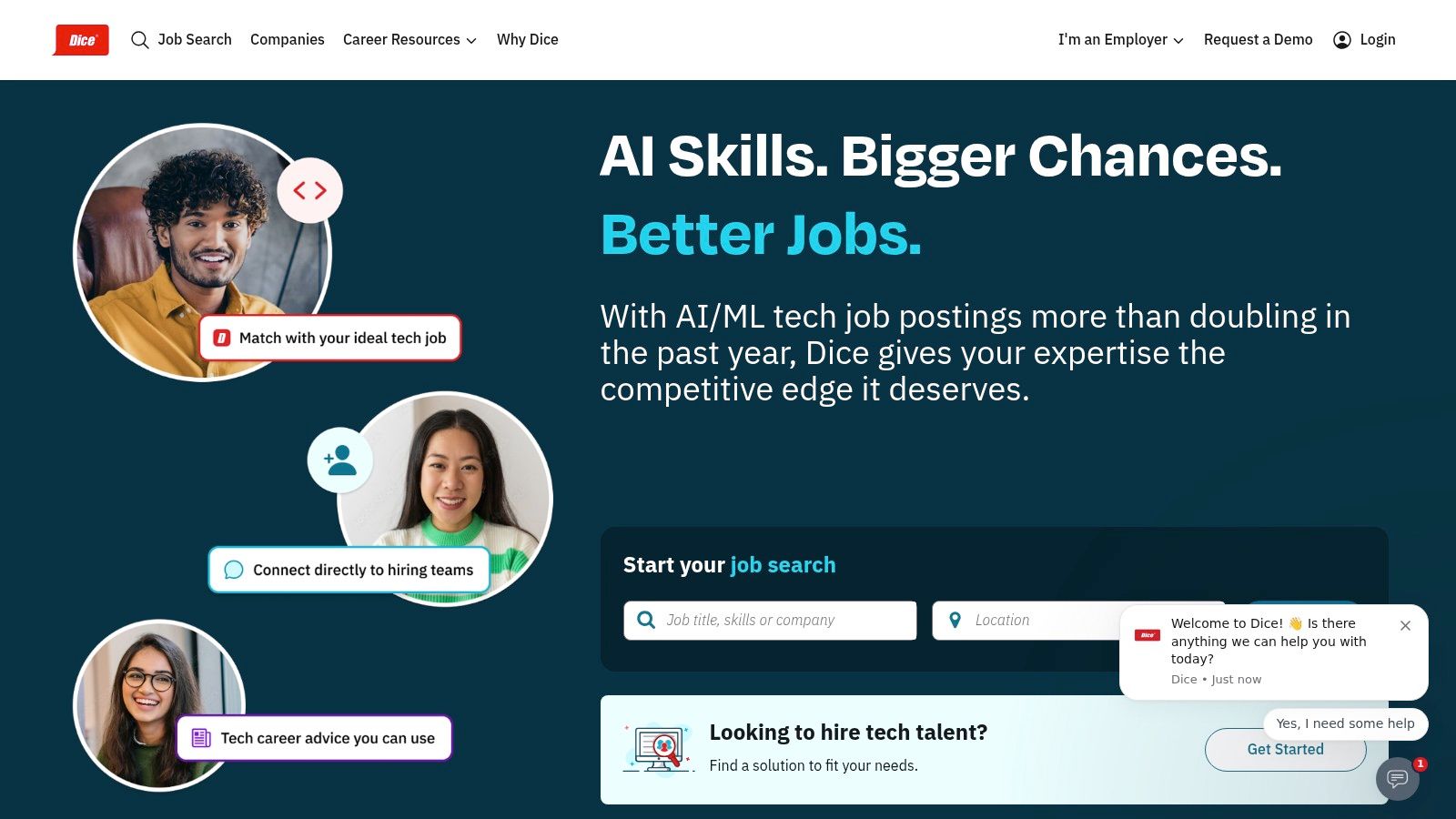
Dice specializes in technical careers, including software, data, cloud, cybersecurity, and information technology. That concentration makes it more efficient than a general job board when your skills and target roles are clearly technical.
Search filters cover skills, tools, and remote options, while Dice Match uses profile and resume information to gauge job fit. The platform also offers personalized alerts, mobile search, saving, and applying. A free resume review through a partner adds a supporting service for candidates who want another perspective on how their technical experience is presented.
Specialized discovery is not complete tracking
Dice is a strong discovery tool for technical candidates because the inventory and filters align with the language recruiters use. Its limitation is scope. Nontechnical candidates won't gain much from it, and the experience can depend on third-party recruiters sourcing through the platform.
Treat match scores as prioritization aids, not evidence that an employer will respond. Save the original role, note which skills made it relevant, and track every communication after applying. That process matters because a technically strong match can still produce an opaque hiring experience.
Top 10 Job Search Apps Comparison
| Product | Core features ✨ | UX / quality ★ | Price & value 💰 | Target audience 👥 | Standout USP 🏆 |
|---|---|---|---|---|---|
| 🏆 GhostedBy | Ghosted Ratings, private Application Board, outcome reporting, Agentic Inbox | ★★★★☆, transparent, verified outcomes | 💰 Free core; Agentic Inbox $4/mo | 👥 Job seekers, career coaches, researchers | ✨ Outcome-based transparency; privacy-first; no pay-to-influence |
| LinkedIn Jobs | Network referrals, Easy Apply, Premium insights | ★★★★☆, strong network; mixed listing quality | 💰 Free; Premium Career paid option | 👥 Mid–senior professionals, recruiters | ✨ Network-driven referrals & company context |
| Indeed Job Search | Aggregated listings, AI Career Scout, alerts | ★★★★☆, huge coverage; occasional spam | 💰 Free to use; employers pay to promote | 👥 Broad job seekers across industries | ✨ Massive reach + strong alerting |
| ZipRecruiter Job Search | One-tap apply, profile matching, view notifications | ★★★★☆, fast workflow, visible signals | 💰 Free for candidates | 👥 Seekers wanting rapid traction & feedback | ✨ Quick apply + application-view signals |
| Glassdoor | Company reviews, salary data, Fishbowl Q&A | ★★★☆☆, deep research; variable dynamics | 💰 Free; employer features paid | 👥 Candidates researching culture & comp | ✨ In-depth culture & compensation insights |
| FlexJobs | Hand-screened remote/flexible roles, Expert Apply | ★★★★☆, high signal-to-noise | 💰 Paid subscription (trial available) | 👥 Remote/hybrid/flexible-work seekers | ✨ Vetted, scam-free curated listings |
| Snagajob | Local hourly discovery, one-click apply, map view | ★★★☆☆, fast local matching | 💰 Free for job seekers | 👥 Hourly workers (retail, hospitality) | ✨ Hourly & local-first marketplace |
| Handshake | Campus events, university-linked jobs, messaging | ★★★★☆, student-friendly UX | 💰 Free for students (school access) | 👥 Students & recent grads | ✨ Deep college recruiting integration |
| Wellfound (AngelList) | One-profile apply, salary/equity visibility | ★★★★☆, startup-focused clarity | 💰 Free for candidates | 👥 Startup/tech job seekers | ✨ Startup roles with comp transparency |
| Dice | Tech-focused filters, Dice Match scoring | ★★★★☆, strong for technical roles | 💰 Free for candidates | 👥 Tech professionals (dev, security, cloud) | ✨ Specialized tech matching & scoring |
Build a Job Search Stack You Can Actually Maintain
The best job search apps work as a system, not as competing destinations. Start with a broad discovery platform that covers your target geography and role family. Indeed provides wide marketplace coverage, LinkedIn adds recruiter visibility and network access, and ZipRecruiter emphasizes fast matching and application-view signals.
Then add a specialist only when it solves a clear problem. FlexJobs suits candidates who require remote or flexible work and prefer screened listings. Snagajob fits local hourly searches. Handshake is more relevant for students and recent graduates, while Wellfound and Dice narrow discovery for startup and technical careers. Glassdoor serves a different stage, employer research, rather than pure application volume.
A separate candidate-experience and tracking layer helps close the gap left by most job boards. GhostedBy lets you check available company-level response patterns before applying, then record stages, dates, outcomes, and silence privately. That matters because ghosting affects both sides of hiring. A 2025 iHire survey found that 53% of job seekers said a potential employer had ghosted them, with the largest reported share occurring after an application. A separate Greenhouse candidate experience report found that 61% of job seekers had experienced ghosting after a job interview. Candidate silence also affects employers, with 41% of organizations reporting candidate ghosting during the interview stage in a SHRM 2025 talent trends summary.
Practical rule: Choose tools by bottleneck. Use a marketplace for discovery, a specialist for relevance, and a tracking layer for what happens after submission.
Define a small set of target roles before turning on alerts. Record every application immediately, including the employer, role, date, application destination, stage, and next action. Check available employer context before spending time on a customized application, and review your outcomes regularly. If one channel generates views but no conversations, or another produces stronger follow-up, adjust the mix.
The goal isn't to maximize submissions. It's to create a search process you can maintain, inspect, and improve. A smaller number of well-recorded applications can be more useful than an unstructured stream that you can't revisit or evaluate.
Use GhostedBy to check candidate-reported response patterns before you apply, then keep your applications, stages, dates, and outcomes organized in one private board. Visit GhostedBy to add post-application visibility to the job-search apps you already use.