A recruiter who was keen on a call last week and now answers nothing is one of the more confusing parts of a job search. You did the screening call, you sent the extra details they asked for, and the thread has gone quiet. Recruiters ghosting candidates is common enough that it rarely says anything about you, but it does change what you should do next.
More than half of job seekers, 53%, experienced ghosting within the last year, according to Criteria's 2026 Candidate Experience Report, a global survey of more than 2,500 job seekers reported by Fortune. In a separate measure from the same report, 48% of applicants said an employer ignored them in 2025, up from 38% in 2024.
Why Recruiter Silence Has Grown
Application volume is one driver. Josh Millet, cofounder and chief executive of Criteria, told Fortune: "We're seeing a surge in application volume, largely fueled by AI tools that make it easier than ever to apply and tailor résumés at scale." Hiring teams, he said, "are spending more time reviewing applications, but getting less meaningful signals from each one."
Greenhouse's 2024 State of Job Hunting report found recruiter workload on its platform rose 26% in a single quarter, and 38% of the 2,500 workers it surveyed said they were mass applying to roles. When one recruiter is working dozens of roles, messages to candidates who are no longer in the running are the easiest thing to drop.
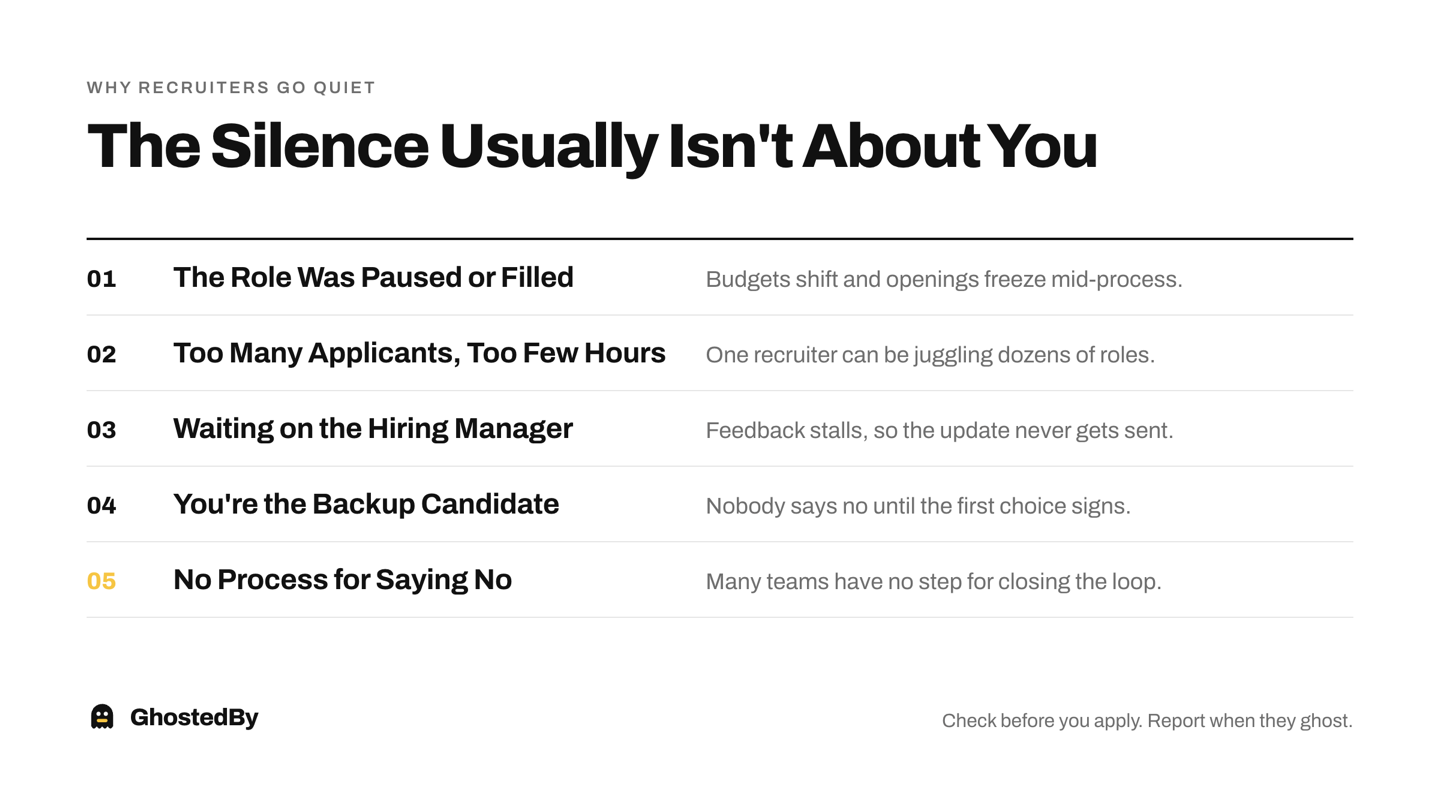
Five Reasons a Recruiter Goes Quiet
The Role Was Paused or Filled
A hiring freeze, a reorganisation or a budget cut can stop a vacancy overnight. So can an internal candidate who gets the job before anyone tells the recruiter. The recruiter may not be allowed to say anything until the decision is final, and by then your application is weeks old. Some listings were never live at all, which our guide to ghost jobs in the UK covers.
Too Many Applicants, Too Few Hours
An in-house recruiter often carries many open roles at once. Updates go first to the candidates still in the process. Everyone else waits for a batch rejection that may never be sent.
Waiting on the Hiring Manager
Recruiters usually cannot move you forward without feedback from the person hiring. If that manager is travelling, busy or undecided, the recruiter has nothing to tell you and often says nothing at all.
You Are the Backup Candidate
If another candidate is further along, the recruiter keeps the shortlist warm until the offer is signed. Rejecting you too early would leave them with nobody if the first choice turns the job down.
No Process for Saying No
Some teams have no step for closing the loop with unsuccessful candidates. Nobody owns the rejection email, so it never goes out. In the Greenhouse survey, 42% of job seekers said they want stronger communication from recruiters.
In-House and Agency Recruiters Are Different
Before you follow up, work out who you are dealing with. An in-house recruiter works for the employer and can usually find out where the role stands. An agency recruiter works for a recruitment firm, represents several clients, and is often paid only when a candidate they put forward is hired.
Agency silence has its own causes. The client may have filled the role directly or moved it to another agency. The recruiter may have decided not to submit your CV at all. Or the client has gone quiet, and the recruiter is waiting as much as you are.
Your Rights as an Agency Candidate in the UK
Agencies in the UK work under the Conduct of Employment Agencies and Employment Businesses Regulations 2003. Regulation 19(3) says: "Neither an agency nor an employment business may introduce or supply a work-seeker to a hirer unless it has obtained confirmation that the work-seeker is willing to work in the position which the hirer seeks to fill." In practice, an agency should check with you before putting you forward for a specific role. Regulation 28 also limits when an agency can disclose information about you without your prior consent.
Members of the Recruitment and Employment Confederation sign up to a code of practice as well. Principle 10(b) says members "must ensure that they have obtained consent or that they have another legal basis which they can rely on (such consent or legal basis to be documented) before disclosing, transferring, displaying, submitting or seeking confidential or personal information."
So it is reasonable to ask an agency recruiter which clients your CV has gone to. For the full picture, you can make a subject access request under UK GDPR. The organisation normally has one month to reply, can take up to two more months for a complex request as long as it tells you within the first month, and in most cases cannot charge a fee.
How to Follow Up
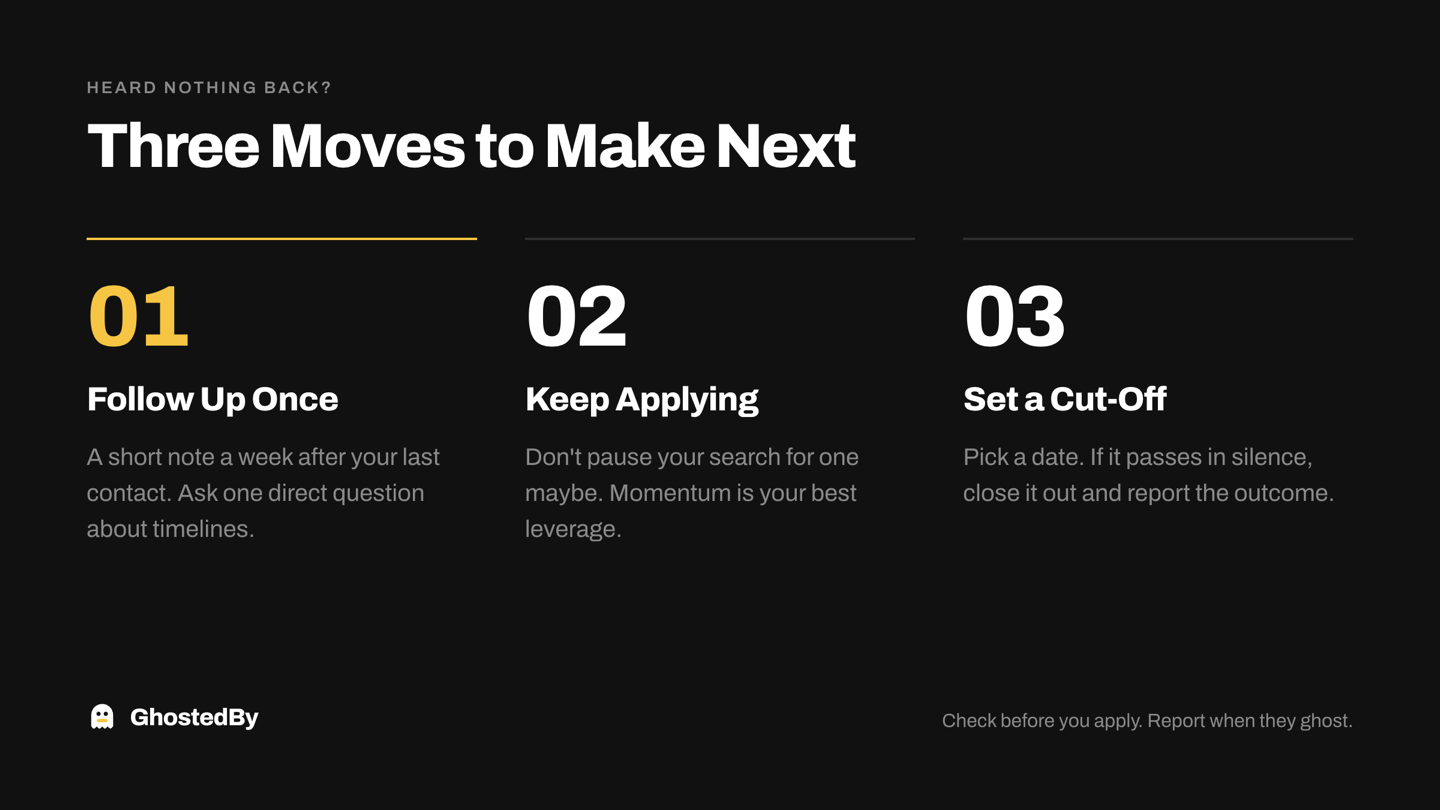
Send one follow-up a week after your last contact. Keep it to three sentences: the role and the date you last spoke, a line on why you are still interested, and a direct question.
Hi Priya, we spoke on 3 September about the Customer Success Manager role. I'm still keen and available for next steps. Is the role still open, and has my CV gone to the client yet?
For an in-house recruiter, swap the last question for one about when they expect to decide. For an agency recruiter, keep it. The answer tells you whether you are in a live process or sitting in a database.
Mistakes That Make Silence Worse
- Sending several messages in one week. One clear message is easier to answer than three short ones.
- Chasing the same person on email, LinkedIn and phone at once.
- Applying directly for a role an agency may already have submitted you for, which can create a duplicate submission the employer then has to untangle.
- Pausing your search while you wait for one recruiter to come back.
When to Move On
When you send your follow-up, set a cut-off 21 days from the recruiter's last contact. If that date passes with no reply, stop chasing and put the time into other applications. If you were working through an agency, you can register with another agency that recruits for the same employer, as long as you tell them where your CV has already gone.
Log when each recruiter went quiet and at what stage, in a spreadsheet or the GhostedBy tracker. After a few weeks, patterns show up, and an employer that goes silent after every screening call is worth remembering. Our guide on how long to wait after an interview sets out a day-by-day timeline you can reuse at any stage.
Frequently Asked Questions
How Long Should I Wait Before Following Up With a Recruiter?
About a week after your last contact. If the recruiter gave you a date, wait until the day after it passes.
Is It Normal for Recruiters to Ghost Candidates?
It is common. In Criteria's 2026 report, 53% of job seekers said they had been ghosted within the past year. It rarely reflects on your application.
Can a UK Agency Send My CV to an Employer Without Asking?
Under regulation 19(3) of the 2003 Conduct Regulations, an agency must confirm you are willing to work in a role before introducing you to that employer. If you are unsure where your CV has gone, ask the agency or make a subject access request.
Should I Apply Directly if an Agency Recruiter Goes Quiet?
Ask the agency first whether they submitted you. Applying directly for a role you were already put forward for can create a duplicate submission.
Check the Employer Before You Apply Again
An employer that goes quiet on many candidates leaves a record. On GhostedBy, verified candidates report how their applications ended, and each company's Ghosted Rating shows the share of those outcomes that ended with no reply.
Sources
- Fortune, 20 March 2026, reporting Criteria's Candidate Experience Report
- Greenhouse, 2024 State of Job Hunting report, December 2024
- Conduct of Employment Agencies and Employment Businesses Regulations 2003, regulation 19
- REC Code of Professional Practice
- ICO, what to expect after making a subject access request